

Cultivating Peace in Solitude
Finding Serenity in Your Own Company
Not all quiet feels the same. There’s the kind that feels heavy, like loneliness settling in your bones, and then there’s the kind that wraps around you like a weighted blanket. Safe. Soothing. Whole.
In a world that glorifies busyness and often treats stillness like a problem to solve, choosing solitude can feel radical. But what if being alone wasn’t about isolation . . . and instead became your way back to yourself?
Intentional solitude offers space to reflect, recharge, and rediscover the parts of you that have been patiently waiting beneath the noise. It’s not about withdrawing, it’s about listening to the voice inside that gets drowned out in the chaos. And for women navigating the complex landscape of midlife? This isn’t a luxury. It’s a lifeline.
If the idea of peace in your own company feels out of reach, you’re not alone. But maybe — just maybe — it’s closer than you think.
Rethinking What Solitude Really Means
We’ve been taught that being alone means something’s missing. That it’s a warning sign. A red flag. But here’s the truth: peaceful solitude isn’t about disconnection, it’s about deep reconnection.
Loneliness aches. Solitude heals.
One leaves you feeling hollow. The other invites you to fill your own cup.
That quiet moment? It’s not evidence of lack. It’s space you’ve intentionally made; space that welcomes your thoughts, your breath, your being.
What if solitude isn’t something to survive, but something sacred to reclaim?
Getting Curious About Your Inner Voice
Here’s the thing about quiet: it amplifies whatever’s already going on inside. And sometimes, that voice in your head? She’s not the kindest.
Solitude offers you a chance to tune in, and if needed, gently reframe.
Start by asking:
- Is this thought helping me, or hurting me?
- Would I say this to a friend I love?
- What’s another way to see this moment?
You don’t have to banish every doubt. Just begin noticing which voices deserve your attention, and which ones are echoes of old fears, not truths.
Slowing Down Without Guilt
We live in a world that treats stillness like wasted potential. Productivity is the altar; exhaustion, the offering.
But solitude doesn’t ask you to do. It invites you to be.
When was the last time you sat — no phone, no to-do list — and simply existed?
Not performing. Not achieving. Just being with yourself.
That’s where clarity is born.
In the quiet. In the breath. In the in-between.
Sitting With the Awkward Bits
Let’s be honest: being alone with your thoughts isn’t always serene. Sometimes it feels more like a first date with someone who talks too much and orders for you. (Except the someone is . . . also you.)
That discomfort? It’s part of the process. Notice it. Breathe through it. Let it soften.
Because just beyond that awkward silence lives the part of you that’s been waiting to be heard.
Easing In With Gentle Rituals
Solitude doesn’t have to be dramatic or ceremonial. Start small.
Maybe it’s five quiet minutes in the morning, just you and your tea.
Maybe it’s a short walk without your phone, where the birds and breeze narrate your thoughts.
Or a little nook with soft light and a blanket, your “sanctuary” for unwinding.
There’s no perfect way to “do solitude.”
You just have to show up for yourself, as you are.
Discovering Your Solitude Style
Solitude isn’t one-size-fits-all. Some people feel restored by stillness; others find peace in motion or creativity.
So ask yourself:
Do I recharge through quiet, or through doing something solo and meaningful?
What kinds of solo time leave me feeling grounded — not drained?
You might fall into what I call:
- Reflective Solitude — journaling, meditating, curling up with a book
- Active Solitude — gardening, painting, solo hikes that stretch your limbs and clear your mind
Neither is better. Both are valid. Let your needs — and your days — guide you.
Building a “Solitude Toolkit”
Think of it as your little self-care basket for when the world feels like too much.
Maybe it holds:
- A favorite novel or podcast
- A candle that smells like calm
- A soft throw blanket and your journal
- A playlist that matches your mood
- A few creative supplies for when words don’t cut it
Having a go-to space and set of tools helps signal to your nervous system: You’re safe. You’re held. You’re allowed to rest here.
Your Sacred Solo Space
Your environment matters. And it doesn’t need to be a Pinterest-worthy meditation room.
A chair by the window with a view of the sky.
A corner with pillows and a lamp that glows warm at dusk.
A basket of things that feel like you.
Let your space evolve with your needs. Use it for morning check-ins, midday resets, or evening rituals that remind you, this moment belongs to me.
Let Solitude Be a Practice, Not a Test
You don’t need to master solitude. You just need to practice it.
Like tending to a garden, you show up. Water it a little. Come back tomorrow.
Try:
- A morning moment to check in with yourself
- A midday pause to breathe
- An evening reflection before bed — not to “process,” but just to be
Over time, you’ll notice a shift. Not louder. Not flashier. Just quieter inside, and more yours.
Moving Forward With Intention
Solitude isn’t the destination. It’s the bridge — to self-awareness, rest, creativity, and peace.
Ask yourself:
What do I want from this time alone?
A place to think? To breathe? To dream?
Let your answer guide your next step. And let it change, again and again.
Because you’re not doing it wrong if it feels wobbly or strange.
You’re showing up. You’re trying. You’re being human, and that’s more than enough.
3 Ways to Start Today
- Create a cozy corner just for you — a chair, a candle, and a moment
- Try 10 minutes of intentional solitude — no phone, no plan, just presence
- Reflect on what kind of solitude feels like nourishment — and give yourself permission to have it
What would it feel like to befriend your own company again?
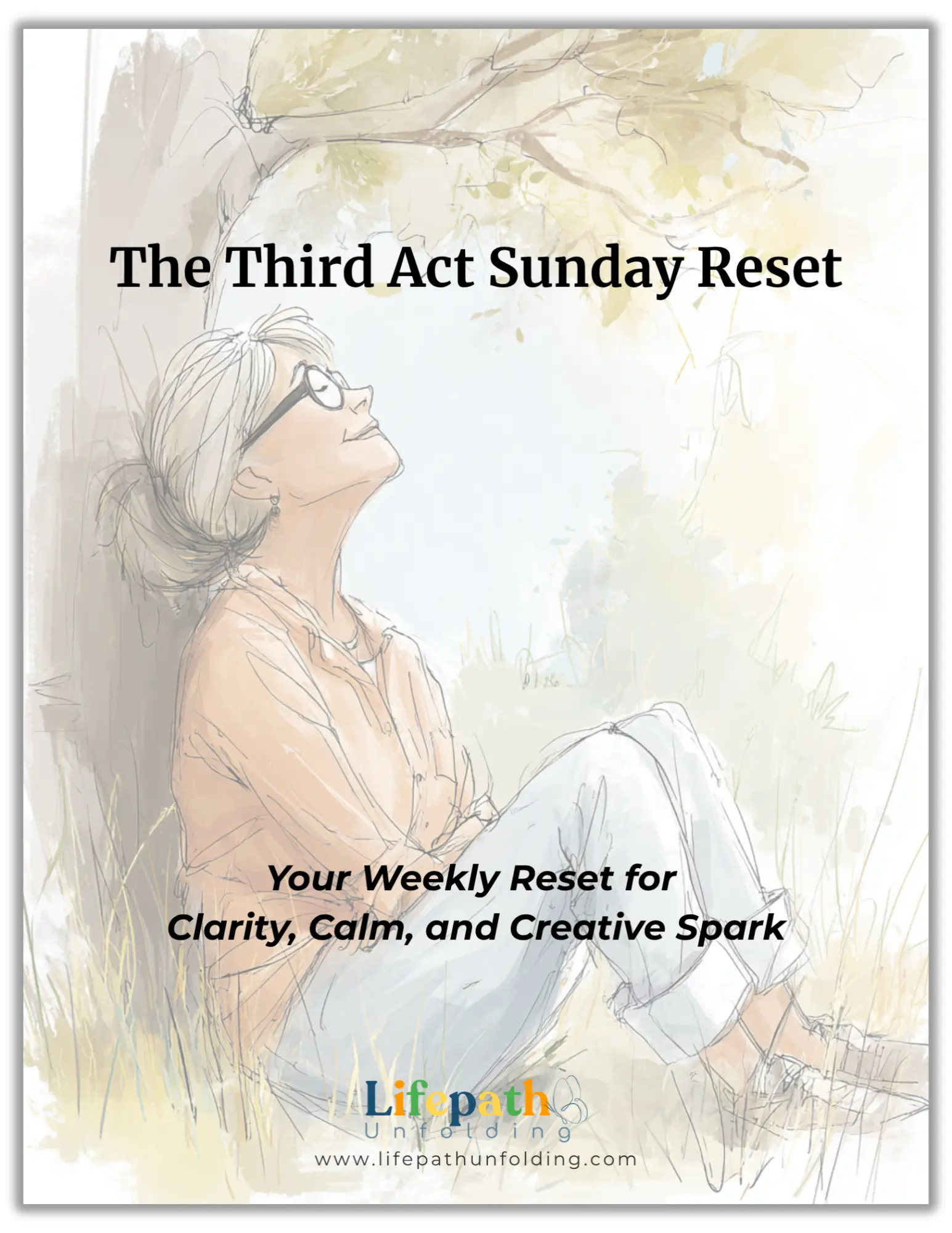
Get Your Free Workbook!
A simple weekly ritual to pause, reflect, and start your week with clarity, calm, and creative spark.