

Building Daily Rituals for Solo Living
A Practical Path to Balance and Intention
The Heart of It: Building daily rituals isn’t about adding more to your plate. It’s about giving your day a few steady anchors so you feel grounded, clear, and cared for, especially when you live alone and no one else’s routine is shaping your time.
Living solo can feel like relief and freedom. It can also feel oddly untethered, like you’re floating through the hours with nothing to push against.
When the quiet shows up, you don’t need to fill it. You need to shape it.
What are daily rituals, and why do they matter for solo living?
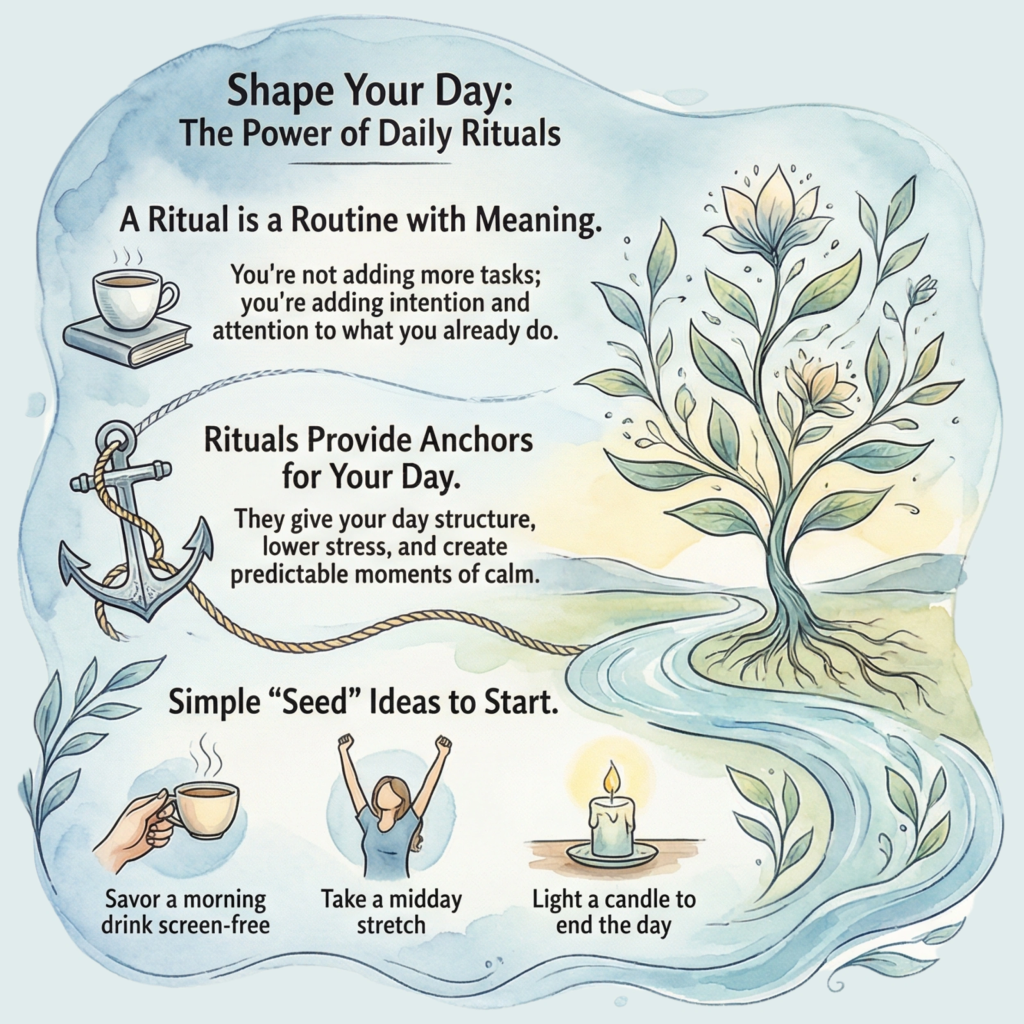
Daily rituals are small, meaningful actions you repeat with purpose, like drinking coffee by the window or lighting a candle at night. When you live alone, they give your day structure, lower stress, and remind you that your time and well-being matter.
Why rituals matter when you live alone
Rituals are small actions that hold meaning. They’re not about being “good” or productive. They’re about having anchors you can return to, especially when life has shifted.
Rituals are daily reminders that your needs count, every single day. Not after you “get everything done.” Not once you feel more motivated. Today.
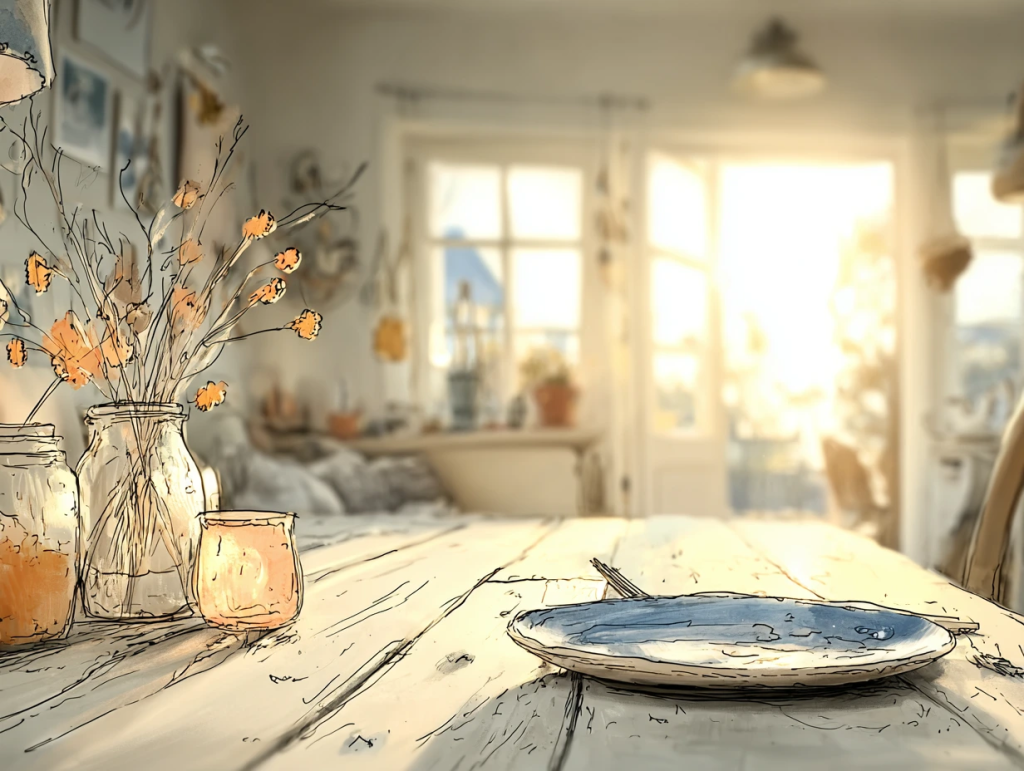
After a transition, it’s common to feel:
- A little adrift inside your day
- Unsure how to structure your time
- Hesitant to sit in the quiet
That doesn’t mean anything is wrong with you.
It means your old routines were built for an older version of your life. Now you’re in a season where you get to rebuild with intention.
What’s the point of rituals if I already have habits?
Habits keep life moving. Rituals help you feel connected while you’re moving. You’re not adding more to your list, you’re adding meaning to what you already do.
Think of rituals like planting seeds
A ritual can be tiny, even almost unnoticeable. But over time, it becomes a root system.
It steadies you.
It reminds you that your needs matter on a random Tuesday, not just on vacation or after a hard week.
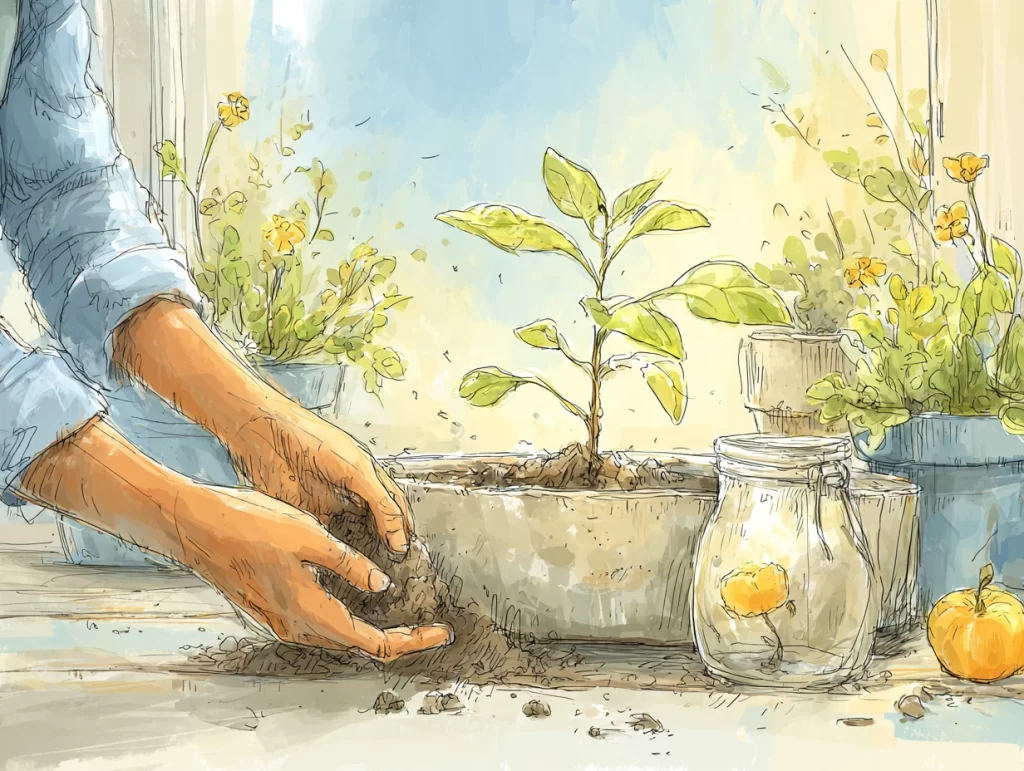
A few simple “seed” ideas:
- A morning drink you savor slowly, without a screen, noticing temperature, smell, and taste
- A midday pause that resets your body: a two-minute stretch or walk around the block
- A clear signal that the day is ending: brewing a cup of herbal tea and lighting a candle
Small acts build steady roots.
And the best part is that you get to choose what fits your real life. Over time, these small acts build a root system. They support you with:
- Care, because you practice noticing yourself
- Clarity, because you keep returning to what matters
- Calm, because your day has predictable touchpoints
Get Your Free Workbook!
A simple weekly ritual to pause, reflect, and start your week with clarity, calm, and creative spark.
Morning rituals: set the tone without rushing yourself
Mornings often decide the emotional mood of the day. Not because you need a perfect routine, but because the first hour tends to set your nervous system’s pace.
If you start the day in a sprint, your body believes it’s a sprinting day.
If you start the day with one clear, steady moment, your body gets a different message.

Make one everyday act feel “set apart”
Pick one thing you already do each morning and do it with full attention.
Sip your coffee by the window.
Notice the light shifting across the room.
Take one slow breath before the first email or text.
You’re not trying to turn your kitchen into a meditation retreat. You’re just giving your mind a clear signal: you’re here, you’re safe, and this day belongs to you, too.
Ask one simple question
Try this before you get pulled into tasks:
What energy do I want to bring to today?
Not “What do I need to fix?” or “How do I catch up?” Just the tone you want to live inside.
I have been doing pour-over coffee for years. It’s a hands-on process, so it’s a perfect anchor point for a ritual. I take time to smell the ground coffee, listen to the sounds of the electric kettle, the sounds of scooping the coffee. While pouring the water over the grounds in the carafe, I take a deep breath and think about my intention for the day. I close my eyes and take that first sip with all my senses. It never fails to get my day off to the right start.
A daily rhythm that gives you structure and room to breathe
One of the freedoms of living alone is that no one else sets your schedule.
One of the challenges is that no one else sets your schedule.
See where this is going?
You might recognize the feeling: “I could do anything . . . if only I knew where to start.”
Rituals help because they give your day a few reliable touchpoints, without turning your life into a strict plan.
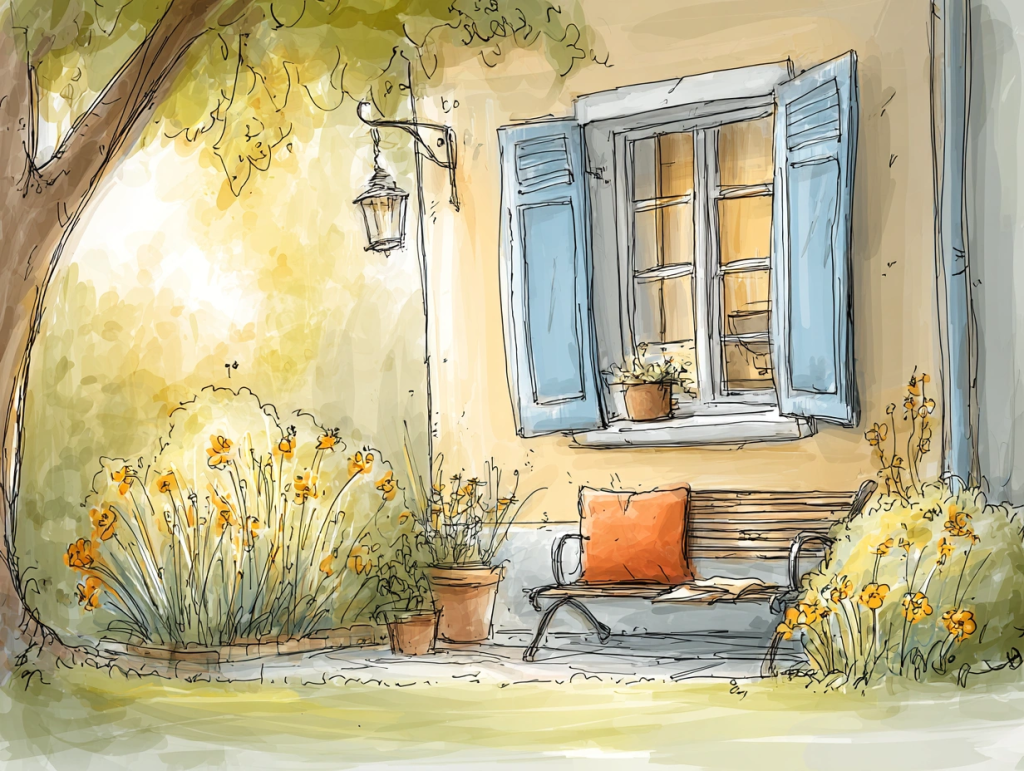
Use anchor points, not a rigid routine
Choose 2 to 3 “this happens no matter what” moments. Keep them realistic. Think in terms of stabilizers, not rules.
Some good anchor points are:
- A walk first thing in the morning (even 5 minutes counts)
- A real lunch break at a real time (for me, this is around 11am)
- A creative session (writing, music, gardening, knitting, anything that brings you back to yourself)
If you’re quietly overwhelmed, this is where you start. Not with a full overhaul, but with a few steady places to stand.
Match tasks to your energy (not to the clock)
If you know you think best in the morning, do focused work then.
If your energy dips mid-afternoon, save that time for simpler tasks like errands, tidying, or making a few calls.
You’re allowed to build a day that works with your body, not against it.
Leave buffer space on purpose
When you live solo, it’s easy for time to blur. Either you fill every gap with noise, or you drift and wonder where the day went.
Try leaving pockets of time that have no assignment.
This is where rest lives.
This is where spontaneity fits.
This is where you catch your breath instead of pushing through.
Evening rituals: mark the end of the day with intention
Evenings can feel open and peaceful. They can also feel a little lonely, especially when the house gets quiet and there’s no shared “wrap-up” to the day.
A simple evening ritual helps your brain understand: work is done, the day is closing, you can relax now.

Three practical evening practices
- Dim the lights and light a candle (if you’re scent sensitive, use flameless candles)
- Write down three things you’re grateful for (small counts, like a good parking spot or a treat for lunch)
- Stretch slowly, or sip something warm, without your phone
You don’t need all three. Choose one and repeat it until it feels normal.
A 5-minute “release” practice
A friend shared a nightly ritual that’s simple and surprisingly powerful: she lights a candle and writes for a few minutes about what she wants to release from the day. She uses a composition notebook and later art journals over her writing, so it does double duty as a sort of evening release and art journal.
It’s not a true journal entry. It’s not a self-improvement project. It’s just a place to put down what you don’t want to carry to bed.
If you want a prompt, try: What am I done holding today?
One note on sleep and screens
If you’re trying to sleep better, it helps to reduce bright light and scrolling at night. The American Heart Association has a clear overview of how sleep affects your health, and it can be a helpful reminder when your brain insists one more video will “relax you.”
Routine vs. ritual: the difference that changes everything
A routine is what you do.
A ritual is how and why you do it.

Here’s the practical shift: you’re not adding tasks, you’re adding meaning.
You can turn ordinary moments into rituals by adding one of these:
Attention: “I’m here for this moment.”
Intention: “This supports the day I want.”
Closure: “This marks a beginning or an ending.”
And yes, a playlist that makes you smile can count. If it changes how you feel in your own space, it matters.
Common feelings in solo living (that don’t mean you’re doing it wrong)
Solo living can bring real peace, and also a strange sense of aloneness that catches you off guard.
Two patterns show up often:
You feel unstructured
When no one else’s schedule bumps into yours, time can get slippery. Days can start to feel the same, even when you’re busy.
Anchor rituals fix this by giving your day a few clear “markers.”
You feel uneasy with quiet
Quiet doesn’t always feel relaxing at first. Sometimes it brings up thoughts you’ve been avoiding.
A ritual gives you something to do with the quiet. Not to escape it, but to make it livable.
Key Takeaways
Rituals are anchors, especially when your life has changed.
You don’t need a strict schedule; you need a few steady touchpoints.
Morning rituals set your emotional tone, evening rituals help you power down.
A ritual is a routine with meaning; it connects you to yourself.
3 Ways to Start Today
- Turn one habit into a ritual. Make your tea or coffee with intention, feel the warmth in your hands, take three slow breaths.
- Anchor your day with one non-negotiable. A short walk, a real lunch break, or five minutes sitting in quiet counts.
- Create a clear close tonight. Light a candle and write one sentence about what you’re letting go of.
You don’t have to figure out your whole life rhythm this week.
You just need one moment that belongs to you.
So . . .
What one ritual will you try this week?
Join us on Facebook in The Reimagined Journey: Solo Midlife Women
FAQs
Want to Pin it?