
Rediscover Your Creative Voice
A New Chapter for Empty Nesters
The Heart of It: When the house gets quiet, it can feel both peaceful and strange. If you want to rediscover your creative voice, you don’t need a big plan, you need small moments of attention, a little space, and a few doable rituals that help you notice what still lights you up.
The quiet that settles after the kids leave isn’t just silence, it’s space.
And in that space, a question can show up when you’re loading the dishwasher or folding towels: Who am I now?
If you’ve been focused on raising kids, holding life together, and being the reliable one, it makes sense if your own creative self got turned down low. Not gone, just quiet.
This season isn’t about proving anything. It’s about reconnecting with the part of you that’s been waiting patiently, the part that still wants to make, notice, play, and express.
The quiet that brings space and questions
Empty nest life has a certain calm to it. The schedule loosens. The house stays cleaner longer (sometimes). You don’t have to be “on” in the same way.
And also, it can feel disorienting.
For years, your days may have been shaped by other people’s needs. When those needs change, you can feel like you’re standing in a room that echoes.
That echo isn’t a problem to fix. It’s information.
It’s your life making room for something new, even if you don’t know what it is yet.
Feelings that often show up in the empty nest
You might notice a mix of emotions that don’t fit neatly in one box:
- A little unmoored, like the old map doesn’t work anymore
- A little curious, because something in you knows there’s more
- A little unsure where to begin, because “begin” can feel too big
If this is you, you’re not behind. You’re in a transition.
This moment isn’t about having it all figured out. It’s about getting still enough to hear what’s been waiting under the surface.
Get Your Free Workbook!
Reflect on your life lessons, values, and creative sparks to uncover the purpose that’s been there all along.
Tuning in to your creative whispers (because they’re usually quiet)
Your creative voice rarely shows up with a marching band. It’s more like a nudge on your sleeve.
It can be easy to miss, especially if you’re used to powering through and being practical. You might tell yourself you’re not “an artistic person” or that it’s too late to start anything new.
But creativity isn’t only painting or writing a novel. It’s the part of you that responds to beauty, pattern, color, story, and meaning. It’s also the part that wants to try something just because it feels good.

Spotting the nudges in everyday life
Look for small moments like these:
- That flicker of interest when you pass an art supply store
- That calm feeling while arranging flowers, folding fabric, or doodling while you’re on a call
- That thought: I used to love this . . . what happened?
These are your signals.
You don’t need to act on all of them. You only need to notice.
Curiosity is your first creative tool, and it’s one you already have.
Do you have to be “good” at something to count as creative?
No. Creativity isn’t a performance review. It’s a relationship with your own attention and expression. If you feel pulled toward something, that pull matters, even if you’re rusty, even if you’re private about it, even if you never show anyone.
Look back at what used to light you up
When you’re trying to rediscover your creative voice, it helps to stop asking, “What should I do now?” and start asking, “What have I already loved?”
Because your past leaves clues.
Before life got filled with calendars and responsibilities, you had interests. Preferences. Things that made time disappear.
Try a simple reflection that doesn’t require you to “decide” anything.
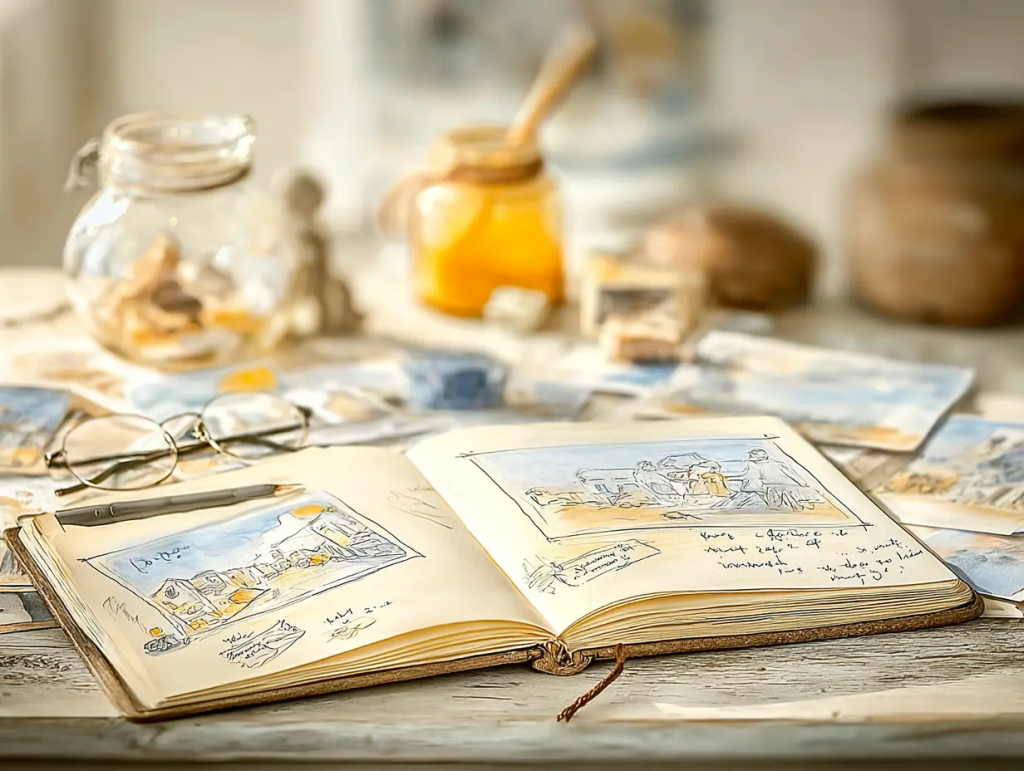
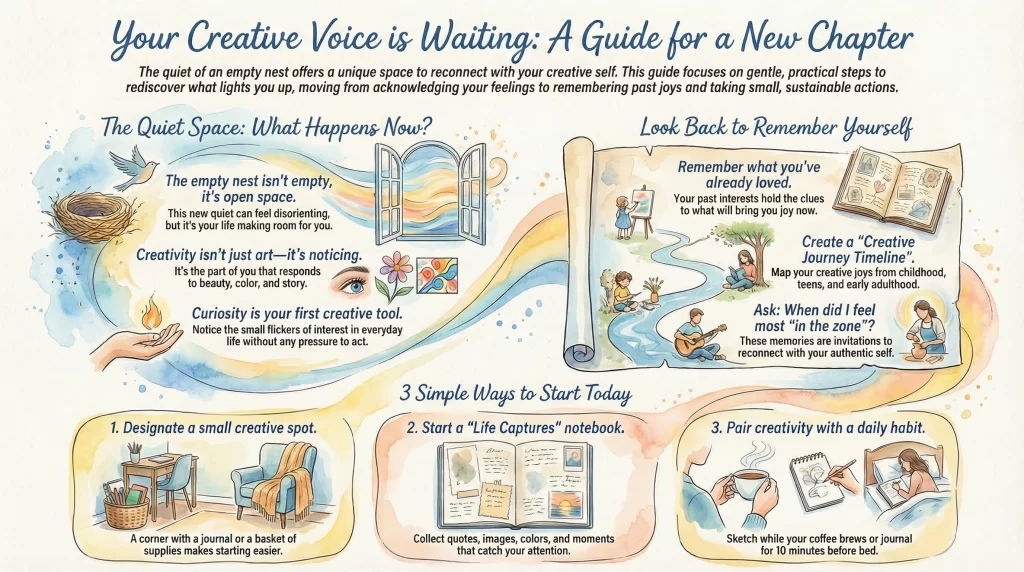
The Creative Journey Timeline (a practical way to remember yourself)
Grab a notebook or a few sheets of paper. Make a quick timeline with three stages:
Childhood
What did you do for fun when no one told you what to do? Did you draw, read, sing, build, dance, write stories, collect things, rearrange your room?
Teens
What did you enjoy when you had a little more freedom? What music, style, crafts, sports, or creative outlets called to you?
Early adulthood
Before the busiest seasons, what did you make time for? What did you try once and secretly love?
Now answer these questions in simple language:
- What hobbies or outlets brought you real joy?
- When did you feel most in the zone, fully present and content?
- What did you stop doing, and why (time, money, confidence, exhaustion)?
These aren’t just memories. They’re invitations.
And you don’t have to turn them into a “project.” You’re just gathering evidence that your creative self has been here all along.
Quick personal aside: I’ve learned that when you feel blank, it’s often because you’re asking yourself to invent a whole new identity overnight. Remembering is usually easier than inventing.
Make space for creativity to breathe (without rearranging your whole life)
Creativity needs room, but it doesn’t need a studio. It needs a place where you can start without friction.
Think of it like keeping a toothbrush visible if you want to floss more. If your creative tools are buried in a closet, you’ll need motivation every time. If they’re within reach, you’ll need less willpower.
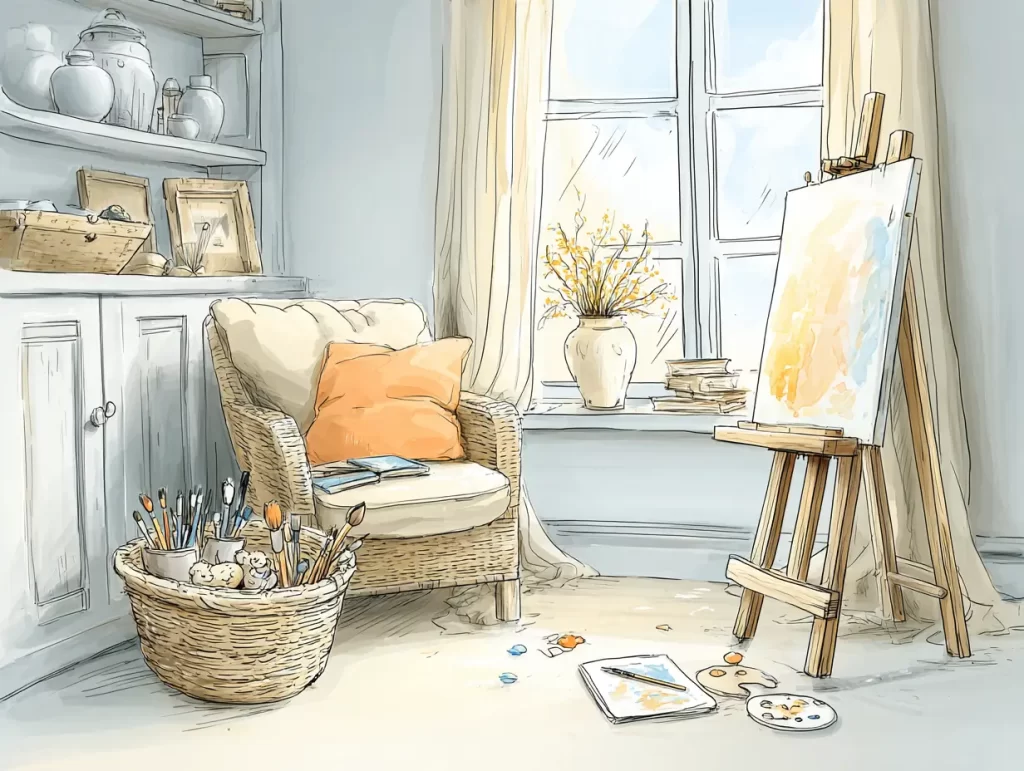
Simple physical space ideas
Pick one small spot and make it yours:
- A corner chair with good light
- A basket with a journal, pens, coloring pencils, or a small sketchpad
- A sticky note on the mirror with one encouraging word (something like “Try” or “Notice”)
That’s enough. The point is access, not aesthetics.
Emotional space matters too
Here’s the part many capable women skip: permission.
You need permission to try things you’re not good at yet. Permission to make “bad” art. Permission to waste paper. Permission to begin again.
And no, you don’t have to wait for inspiration to strike like lightning.
You can go looking for it.
Another personal aside: If you’ve spent years being the responsible one, play can feel oddly uncomfortable at first. That doesn’t mean it’s wrong. It means it’s new.
Go looking for sparks in plain sight
Inspiration often hides in ordinary life. It’s not always a dramatic download. Sometimes it’s a color that stops you for half a second.
Try paying attention to what catches your eye and lingers in your mind.
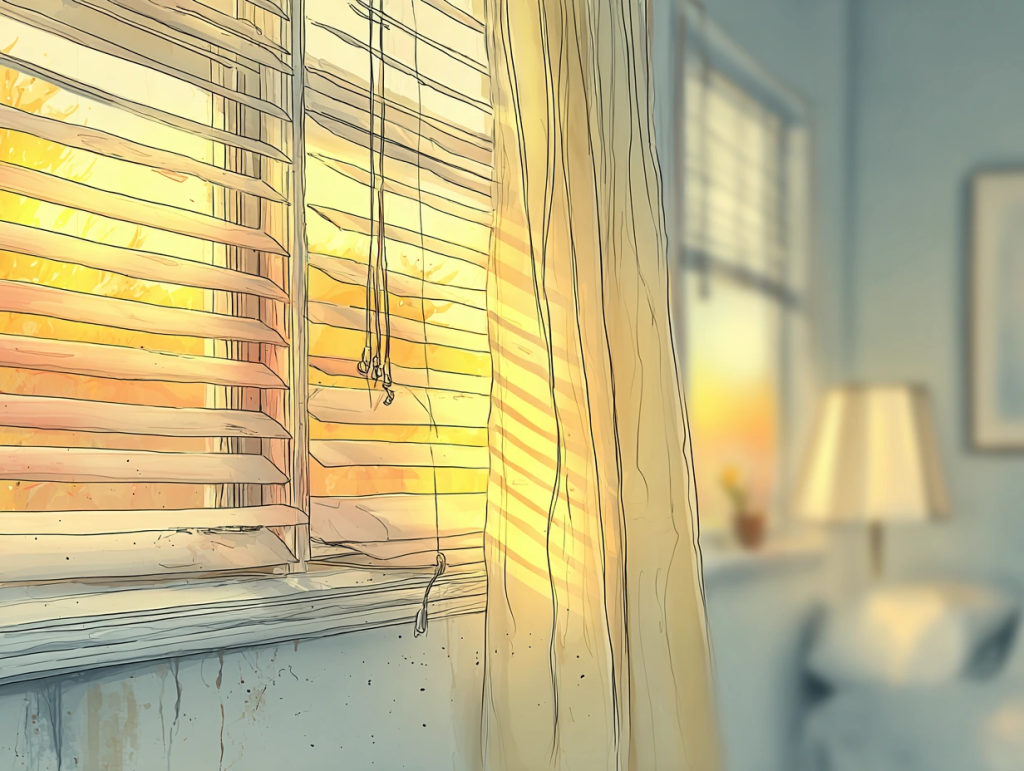
Everyday places sparks show up
- A walk in the park, especially if you slow down enough to notice shapes and shadows
- A page from an old photo album (the textures, the faces, the stories you forgot)
- A color in your coffee mug that makes you smile
Small moments count. They’re how you rebuild your inner connection to “I like this.”
Start a “life captures” notebook
This is one of the easiest ways to rebuild creative momentum, especially if you feel overwhelmed.
Pick any notebook. Title the first page “Life Captures.”
Then use it to collect:
- Moments you want to remember
- Quotes or lines you overhear
- Images you like, even if you don’t know why
- Quick sketches, color combinations, or words you want to revisit
You can also take photos of textures and colors that catch your attention. Rust on a gate. Light through blinds. The pattern of tiles in a bathroom. This isn’t about perfection, it’s about noticing.
Over time, this becomes a personal library of sparks. And sparks are plenty to start with.
Build creative rituals that fit your real life
Rituals are how you stop waiting for the “right time.”
They also help if you live alone and your days sometimes blur together. A small creative habit can become a steady anchor. Not another task, just a small check-in with yourself.
Here are a few options that work in 10-minute increments:
- Sketch while your coffee brews
- Journal before bed (even three sentences counts)
- Reserve Sunday afternoons to rearrange or refresh your space
The goal is consistency, not intensity.
If you show up in small ways, your creative voice starts to trust you again. It stops hiding.
What if you start, and nothing “comes” to you?
Then you still win. Showing up is the point. Creativity often shows up after you begin, not before. Your job is to create a doorway. The ideas can follow later.
Your first step: the Creative Journey Timeline (again, because it works)
If you want one practical starting point, come back to the timeline exercise.
It helps you reconnect to three useful truths:
- What creativity meant to you in past seasons
- What’s missing now, and what’s not missing at all (you might be more resourced than you think)
- Where a spark might be hiding in your current life
No pressure. No performance.
Just reconnection.
And if you notice grief mixed in with the remembering, that’s normal. Some parts of you got set aside for good reasons at the time. You can honor that, and still choose to return to yourself now.
Key Takeaways
The empty nest quiet can bring clarity, and also questions. Both are normal.
Your creative voice tends to whisper through small interests and moments of calm.
Looking back helps you find clues about what still fits you now.
Creativity needs space, but it can be small and simple.
Rituals help you keep showing up, even when motivation comes and goes.
A simple start still counts
You don’t need a full plan. You don’t need a passion project. You don’t need to know what this turns into.
You need a quiet moment, a curious heart, and a willingness to say, I’m ready to listen.
If you want to rediscover your creative voice, start small and keep it real. Ten minutes is enough to begin.
3 Ways to Start Today
- Designate a small creative space, even if it’s one corner of the kitchen table.
- Start a “life captures” notebook, and collect ideas, images, or quotes that catch your attention.
- Pair creativity with a habit, doodle during morning coffee or write a few lines before bed.
So . . .
What creative whisper are you ready to answer?
Join us on Facebook in The Reimagined Journey: Solo Midlife Women
FAQs
Want to Pin it?