
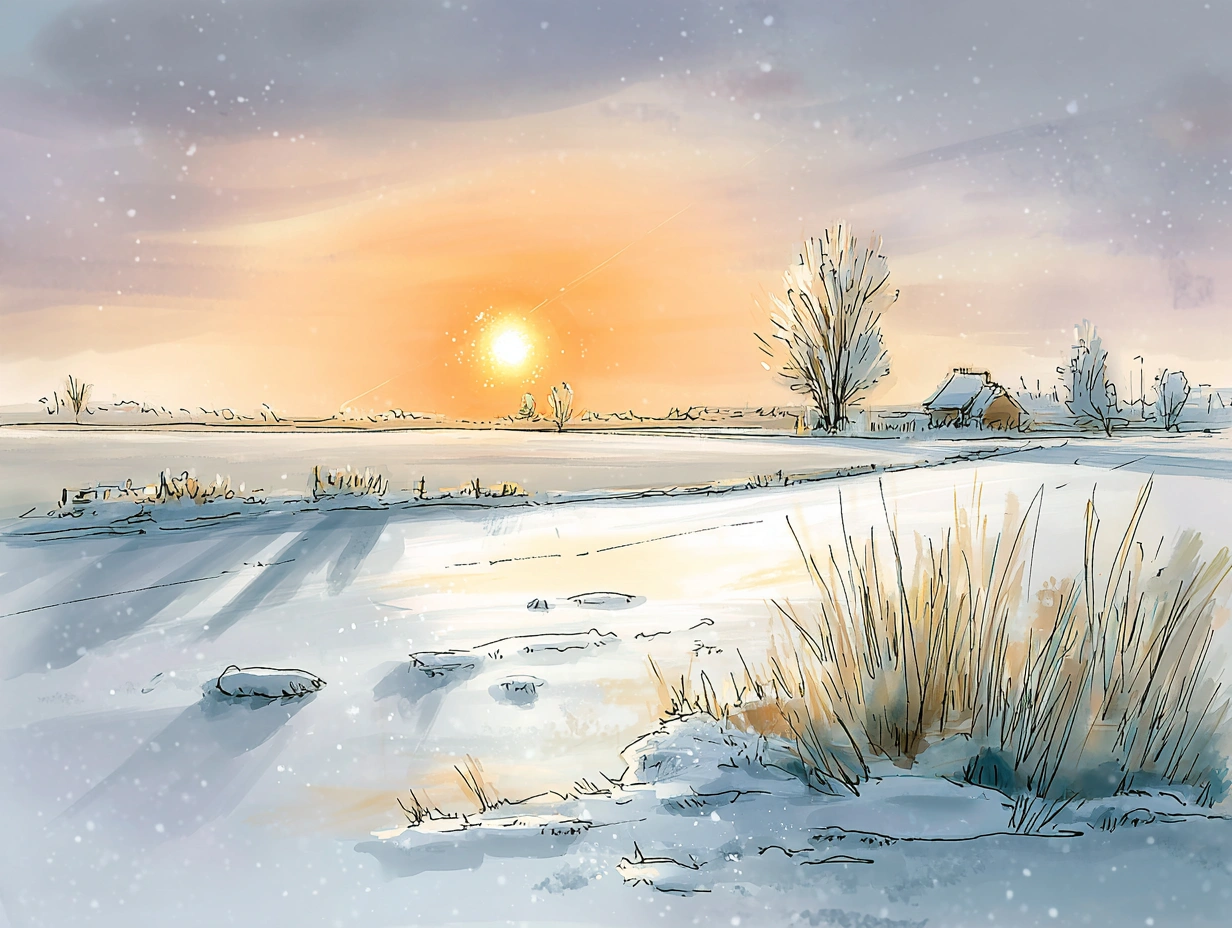
Winter Solstice: A Mindful Renewal
A quiet turning point for your inner light
The Heart of It: The longest night of the year, Winter Solstice, is a built-in pause. You can use it to rest, reflect, and set a steady reset for your mind, your home, and your plans, with less noise, more intention.
You feel it when the light thins. Your body slows down a little, and it’s not because you’re failing. It’s because you’re paying attention.
The Winter Solstice marks the shortest day and the longest night of the year. It’s a real shift in the natural world, and it can be a steady signal in your own life, especially if you’re in midlife and carrying a lot on your own.
If you live solo, this time of year can highlight your independence and your “I’ve got this” strength, while also bringing up that familiar feeling of aloneness. Not loneliness exactly, just the awareness that you are the one who holds the whole container of your life.
You don’t need a formal ritual, a specific belief system, or perfect words. You just need a manageable plan that helps you come back to yourself.
How do you use the Winter Solstice for mindful renewal in midlife?
You treat it like a practical reset point. You rest on purpose, reflect with honesty, and choose a few small actions that support your home, your nervous system, and your next season.
The Winter Solstice, and why it can feel personal
The Winter Solstice is often described as a turning point on the Wheel of the Year, a seasonal cycle many people use as a way to mark time with intention. Even if you’ve never used that language, you still know the feeling of a turning point.
On the solstice, the sun sits at its lowest point in the sky, and the night runs long. Your system notices. You might crave more quiet. You might want to simplify your calendar, sort your papers, cook something warm, or go to bed earlier without explaining yourself to anyone.
This is not about checking out of life. It’s about building a base that can hold what comes next.
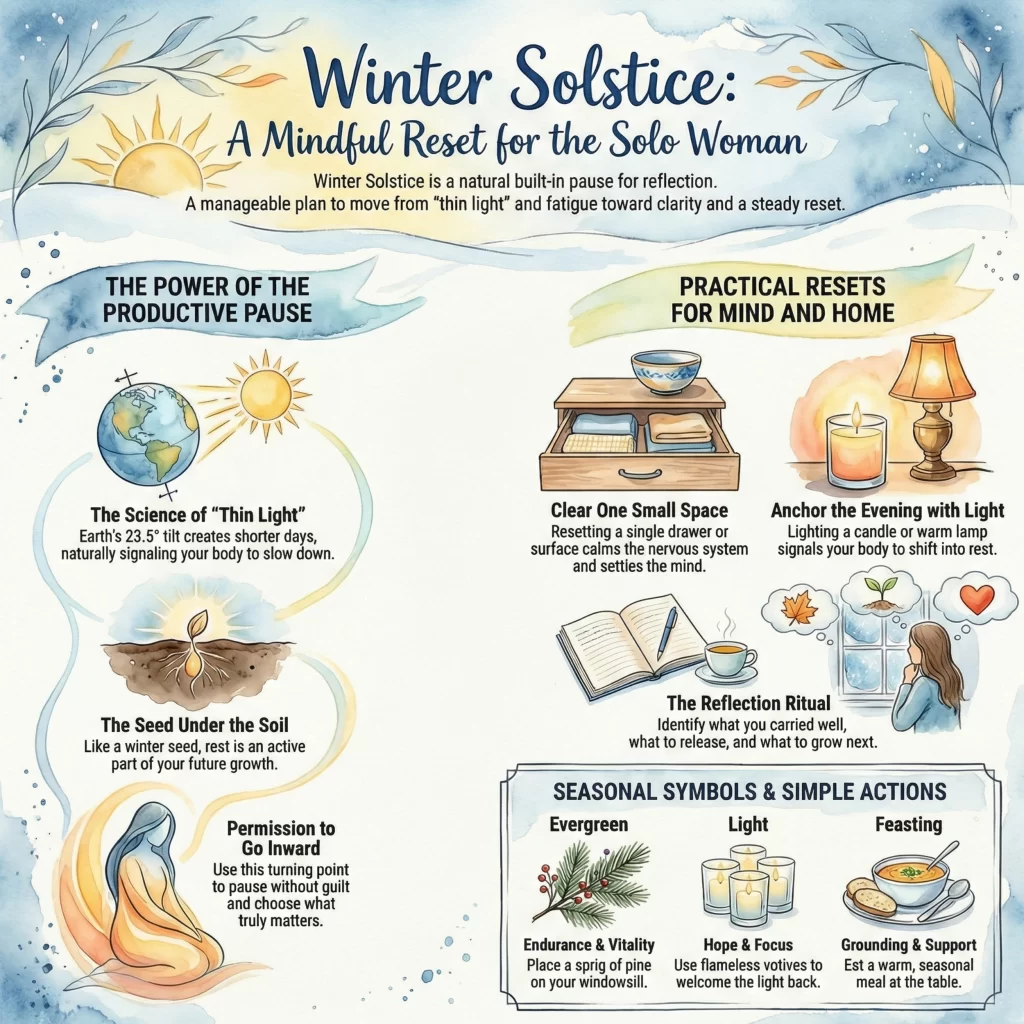
Think of it like a seed under the soil. Nothing looks active up top, but work is happening below. Rest is part of growth.
Get Your Free Workbook!
A simple weekly ritual to pause, reflect, and start your week with clarity, calm, and creative spark.
Why this season calls to midlife women
In midlife, your life can change shape fast. Kids leave home. Relationships shift. Your energy changes. Your tolerance for clutter, drama, and noise often drops.
The solstice fits this season of life because it gives you permission to do what you already need to do:
- Pause without guilt
- Reflect without rushing to fix everything
- Choose what matters for the next chapter
And if you’re living solo, the returning light can land in a very real way. Each morning after the solstice brings a little more daylight. It’s small, but it adds up, and that’s the point.
Your life works the same way. Each choice you make can give you a bit more ground under your feet.
A few reminders worth keeping close:
- The shortest day invites an inward look, not a panic response.
- The returning light is a solid symbol of hope because it’s measurable.
- Small choices build stability, even when you’re tired.
You’re not “behind.” You’re in a season.
When I feel scattered, I reset one small space. A drawer, a counter, my bedside table. A little order around me helps my mind settle too.
If you’ve been waiting for motivation to do a full reset, this is your permission slip to go smaller. One cleared surface is often enough to change your mood.
Understanding the solstice: the science, and the meaning you can use
Sometimes it helps to know what’s actually happening out there in the sky. Not because you need a science lesson, but because facts can calm the mind. The solstice isn’t just a feeling. It’s a real event.
The simple science of the shortest day
Here’s the straightforward version:
The Earth tilts on its axis by about 23.5 degrees. During winter in your hemisphere, your part of the world tilts away from the sun. Sunlight hits at a lower angle and for fewer hours. That’s why the days are shorter, and the light can look and feel thin.
That “thin light” can show up in your body as low energy, foggy thinking, or that quiet aloneness you can’t fully explain.
You don’t have to fight it. You can use it.
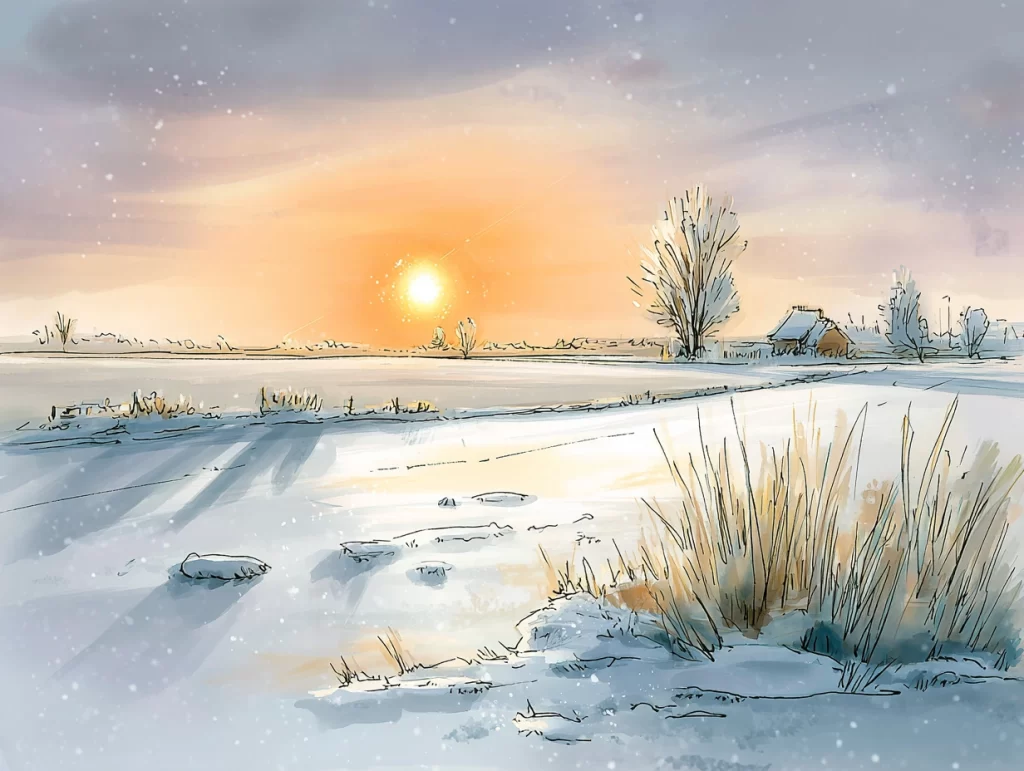
Picture a seed under snow. Not dead. Just resting.
In midlife, a pause like this can be a productive pause. You check your stores. You look at what’s working. You decide what you want to plant when the light returns.
If you notice your mood dropping during the darkest months, it can also help to learn about seasonal mood changes and support options. This overview from Mayo Clinic on seasonal affective disorder (SAD) is a solid place to start.
What the solstice can mean for your inner journey
Solstice season often pulls you toward simple acts that look ordinary, but carry a lot of wisdom:
- Making soup.
- Sorting papers.
- Clearing a shelf.
- Taking a short walk without a podcast.
These aren’t “small” things when your life is full. They’re stabilizers.
Across many places and time periods, people have marked this turning with basics: tending a fire, lighting candles, bringing evergreens inside, sharing food. The point wasn’t perfection. The point was endurance, warmth, and the promise that light returns.
You can do the same thing in a modern, practical way by resetting your mind and your schedule.
Try these three supports:
- Short morning journaling: One page on what you need, what you’ll do, and what you’re ready to release.
- Quiet walks: Ten to twenty minutes is enough to let your thoughts sort themselves.
- Simple home reset: Clear one drawer, one folder, or one bag of papers. Order can calm your nervous system because your brain stops tracking so many loose ends.
You’re not going slower because you’re weaker. You’re going slower because you’re listening.
Timeless symbols that still work for modern mindfulness
You don’t need a ceremony to use the old solstice symbols. You can treat them like visual reminders, the same way you might keep a sticky note on the fridge or an appointment on your calendar.
These symbols work because they’re simple. They’re easy for your brain to understand, even when you’re stressed.
Everyday symbols for strength and steadiness
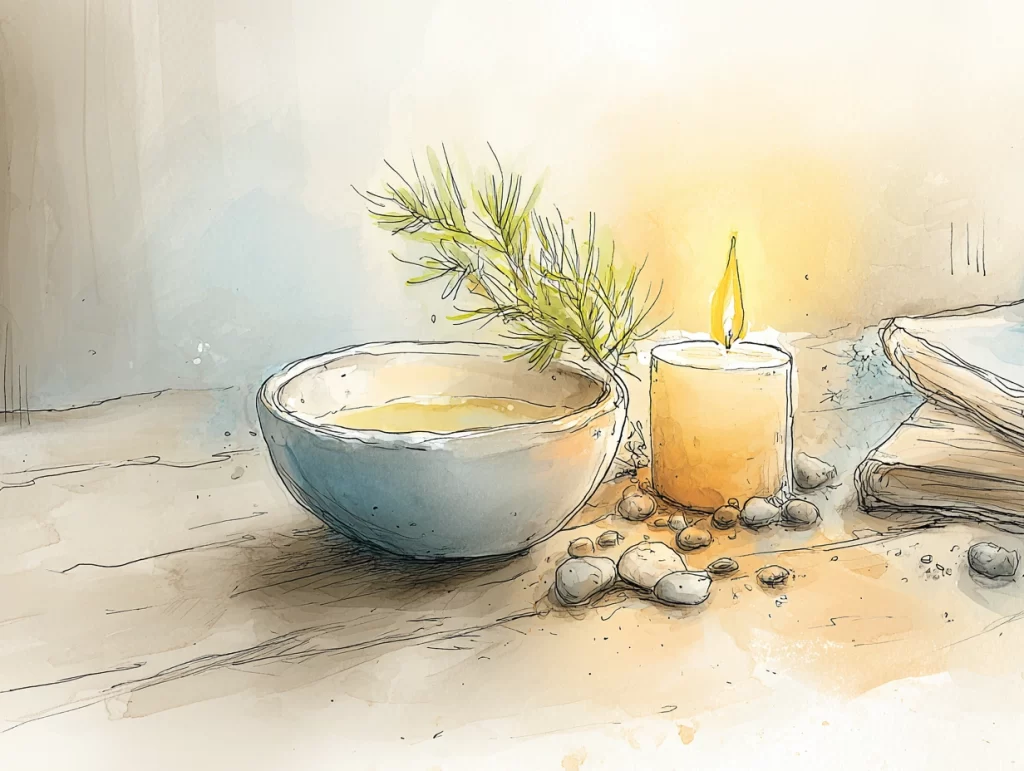
Evergreen: Evergreens stay green through cold months. Put a small sprig of pine, cedar, or rosemary on your desk or kitchen windowsill. It’s a daily reminder that you can keep going, even when conditions aren’t ideal.
Light: Candles, string lights, lanterns, a warm lamp by your chair. One small light can anchor an evening and signal to your body that it’s time to slow down.
Feasting: Food as warmth and support. This doesn’t need to be a big gathering. Make something grounding, like roasted root vegetables or a hearty stew. Eat at the table. Let it count.
Here’s a tiny practice that’s easy to repeat:
- Light a candle at dusk and name one intention. Keep it practical, like clarity around money, or personal, like safer friendships.
- Blow it out at bedtime and thank yourself for showing up.
That’s it. No performance required.
At Winter Solstice, I put flameless votive candles in my windows. I turn them on at sunset and off each morning. It’s a quiet way to welcome the light back, and it makes the house feel steady.
If you want to build a home corner that supports your evenings, you’ll probably like How To Create Sacred Space. It’s a practical guide to shaping a space that feels like a deep breath, especially when you live alone.
Simple ways to celebrate the Winter Solstice for personal renewal
If you’re solo, the holidays can feel loud, busy, and oddly isolating at the same time. A simple solstice plan can give you structure, and structure can feel like support.
This is also where renewal becomes real. Not in a dramatic “new you” way, but in a clear-eyed way that helps you feel more steady in your own life.
Easy solstice ideas that work when you live alone
You don’t need a full ceremony. You need a few doable anchors.
Consider these options:
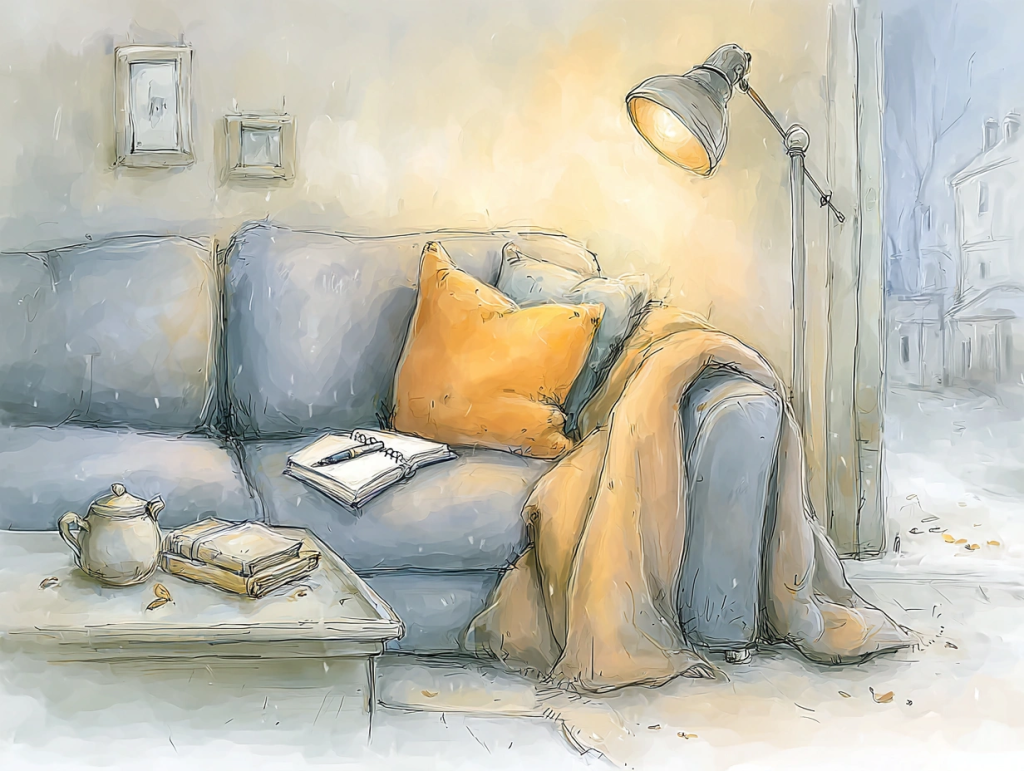
- Reflection corner: A candle (or warm lamp), a notebook, a throw blanket, and a pen that actually writes. Keep it inviting, not fancy.
- Mindful eating with seasonal foods: Citrus for brightness, greens for strength, roots for grounding. Eat at the table, not sitting on the sofa in front of the TV.
- Evening check-in: Write three lines, what worked today, what felt hard, and one next step.
- Light and dark practice: Sit in low light for five minutes, then sit in darkness for five minutes. Notice what changes in your thoughts. You’re not trying to “fix” anything, just noticing.
Aim for ease, not perfection. If your night includes a fudge brownie and a composition notebook, that counts.
A solstice evening ritual you can actually stick to
Pick one evening around the solstice. It can be the exact day, or any night close to it. What matters is your attention.
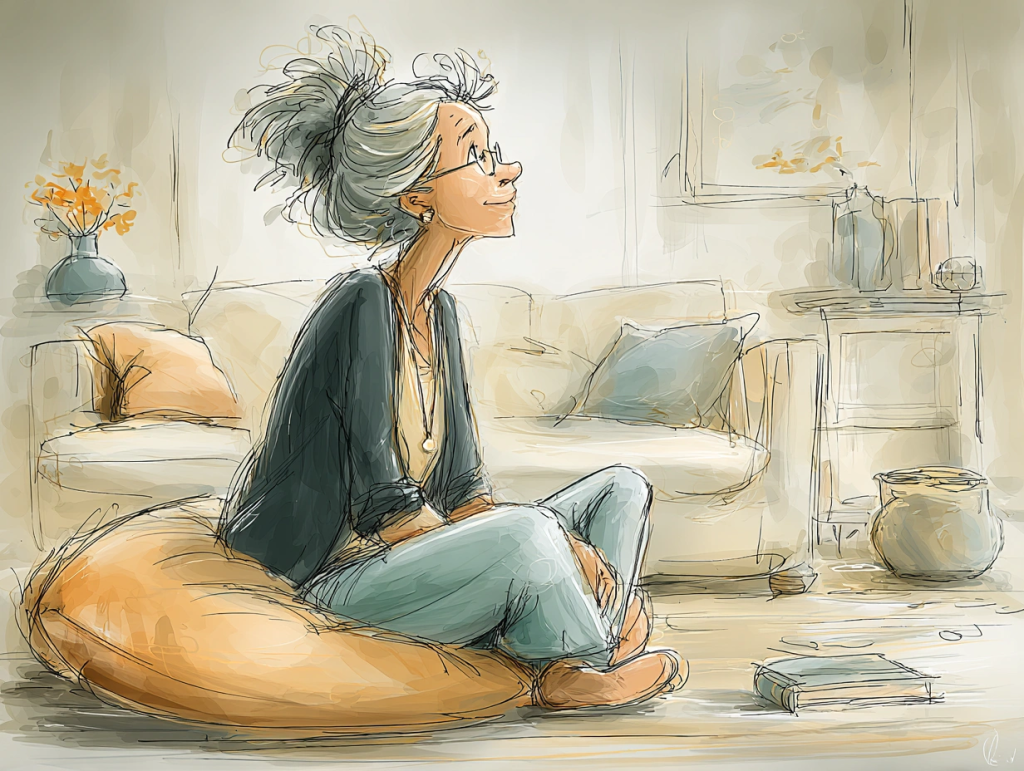
Here’s a step-by-step plan that stays simple and grounded:
- Set the scene: Dim the lights. Turn off most screens. If you can, leave your phone in another room.
- Ground your body: Put on a warm sweater. Make a hot drink. Take three slow breaths.
- Reflect on the year: Write answers to these questions:
- What did you carry well?
- What cost too much?
- What are you ready to release?
- Welcome the returning light: Light a candle or turn on a small lamp and ask:
- What do I invite?
- What will I grow next?
- Write three intentions: Keep them simple and specific:
- One for self-care
- One for relationships
- One for security or planning
- Close with gratitude: Name three things you’re thankful for, even if they’re small (a safe home, a kind neighbor, your steady legs on a walk).
You can do this with music or in silence. Let the quiet do the work.
I start on the floor and clear space around me. Then I take three deep breaths before I light the candle. I read my intentions and gratitudes out loud once, and I let that be enough.
If reading out loud feels strange, write it down and place it somewhere you’ll see it, like beside your coffee mug or on the nightstand.
Nature-based ways to honor the turning, and carry it into daily life
Solstice energy isn’t meant to stay on one night. It’s meant to shape your rhythm after.
When you treat the seasons like a simple calendar for your inner life, you stop forcing yourself to be the same person all year long. Winter can be for reflection. Spring can be for planting. Summer can be for tending. Autumn can be for review.
That rhythm pairs well with real-life planning too, especially when you’re the one handling the details.
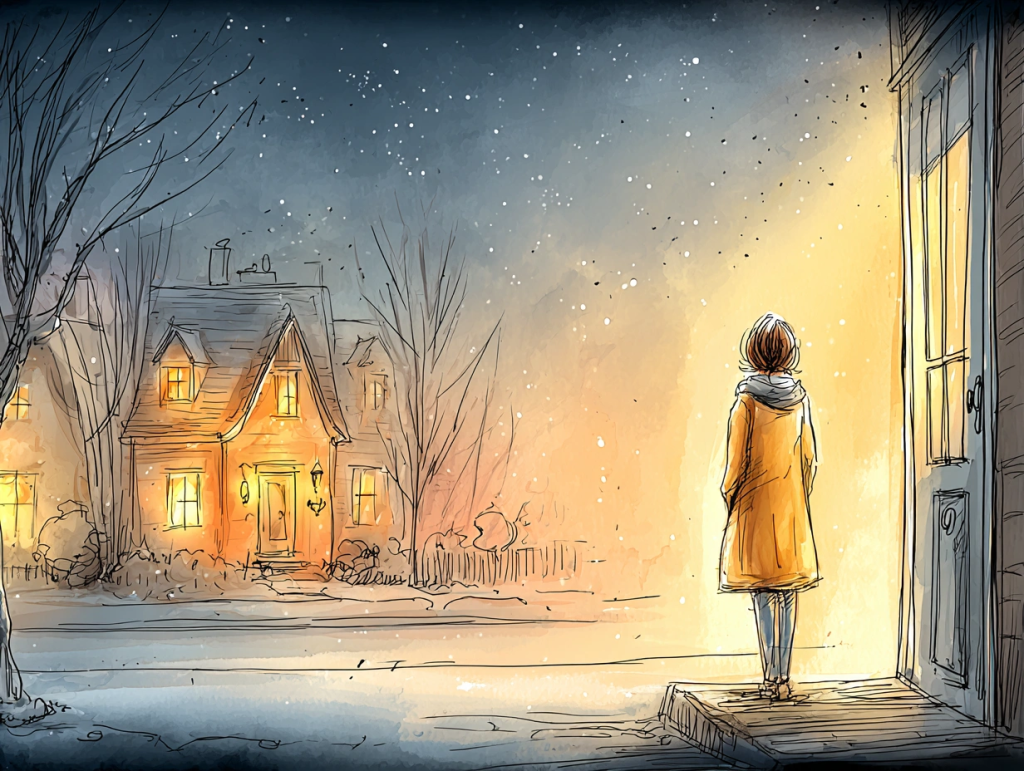
Small nature activities that make your home feel like a sanctuary
You don’t need a big hike or perfect weather. Think small and repeatable.
- Stargazing: Step outside for five minutes. Find one star or planet. Name what you want to remember when your days get loud.
- Evergreen touchpoint: Pick up a few natural items on a walk, pine needles, a small stone, an acorn. Put them in a bowl near your keys so you see them every time you leave and return.
- Light in the window: Place a warm light at a window at dusk. Use flameless candles for fire safety.
- Quiet rearrange: Move one chair closer to daylight. Make one spot where winter sun can hit your face.
Your home doesn’t have to become a storage unit for to-do lists. It can become a place that supports you.
Turn solstice reflections into habits that build trust in yourself
This is where mindful renewal meets life security. A few steady routines can lower overwhelm and boost independence.
Try one of these:
Weekly check-in (20 minutes): Review your goals, your feelings, and your next steps. Keep it simple. One page is enough.
Monthly reset: Clear one drawer, update one plan, schedule one joy. Yes, joy counts as a plan.
Seasonal review (every three months): Choose three wins and three edits. Wins help you see progress. Edits help you stay honest.
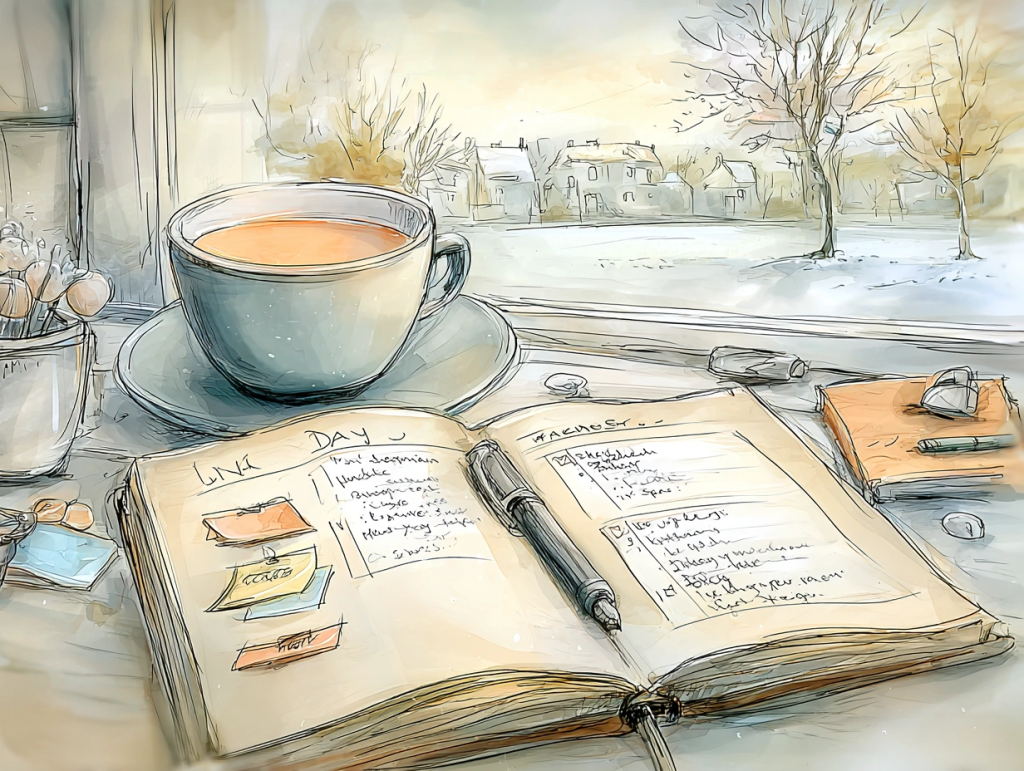
Link your insights to action:
- If security weighs on you, set a weekly money date with yourself.
- If you want more creativity, block one hour on Sundays for art, writing, or music.
- If you want steadier friendships, choose one connection to nurture each week.
Small, repeatable steps build trust.
I use the 12 days between Solstice and New Year’s as my reflection and planning time. It fits the season, and it keeps me from forcing big decisions on a random Tuesday.
Key Takeaways
The Winter Solstice is a natural pause, and you can use it without any formal tradition.
Thin light can bring up aloneness, and it can also offer clarity when you stop fighting it.
Simple actions (one drawer, one page, one walk) can calm your mind and support your next season.
Solstice is not just one night. It’s a rhythm you carry forward with weekly, monthly, and seasonal check-ins.
Your home can support your nervous system when you treat it like a place for rest, not a place to store stress.
3 Ways to Start Today
- Light a candle at dusk and write three lines about what you want to feel next month.
- Clear one drawer or one folder so your space matches your mind.
- Take a 10-minute walk and choose one word to guide your winter.
Let the solstice be your reset
Let this solstice be your reset point, not your finish line. You can use the dark for rest, the returning light for focus, and your own voice for direction.
Keep it simple. Keep it honest. Keep it yours.
Your life responds to the attention you give it, and that attention is a form of power.
So . . .
What’s one thing you’ll do this year to mark the Winter Solstice in a way that supports you?