Exploring Art as Self-Discovery
Because sometimes the brush knows before you do
For many of us, art doesn’t begin with the urge to create something beautiful. It begins with a quieter longing, the pull to understand ourselves more deeply.
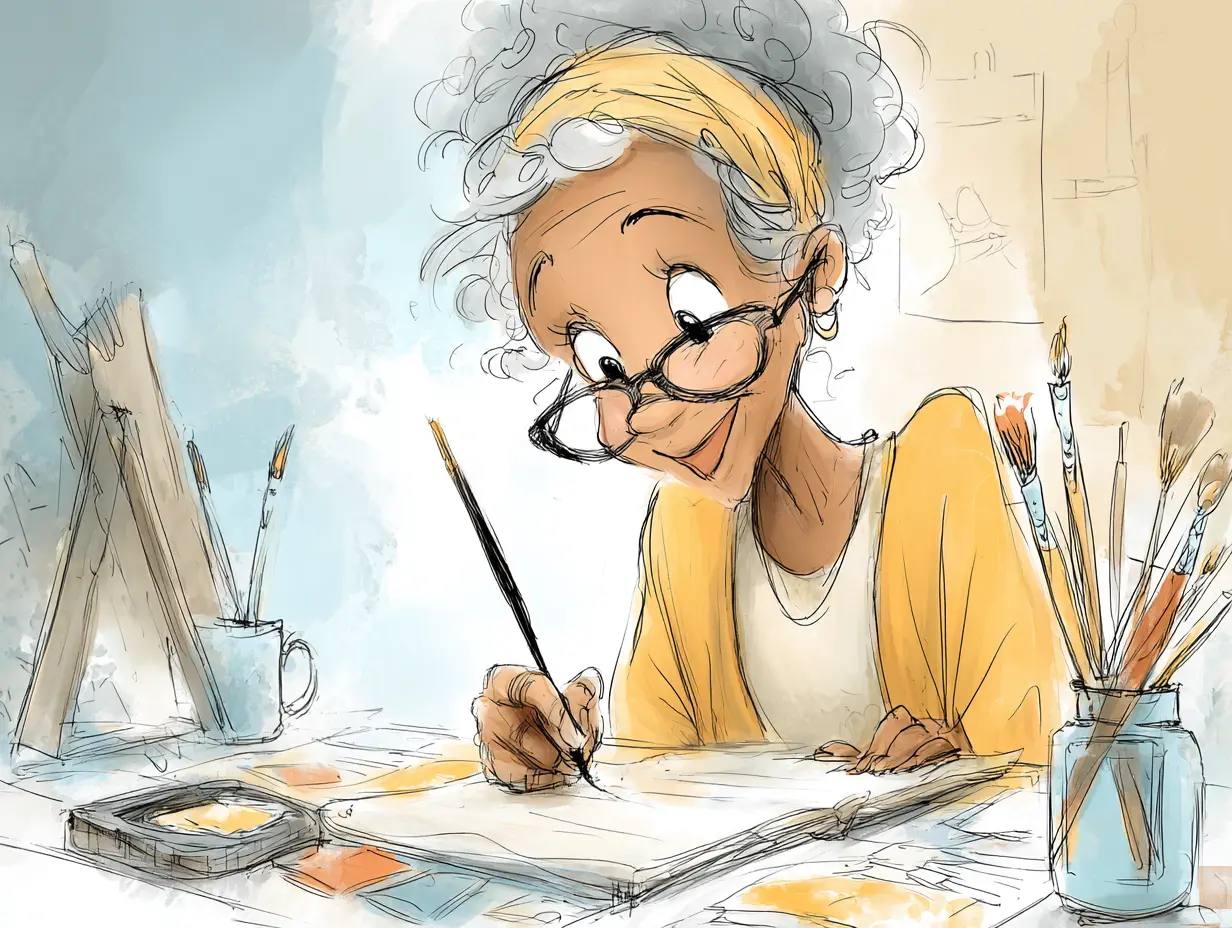
Maybe you pick up a paintbrush, a marker, or a glue stick not because you know what you’re making, but because something inside you wants to move.
I remember one afternoon with a sketchpad and zero expectations. I started doodling circles, then words inside them, then colors around the words. When I looked back at the page, it hit me: I’d drawn my emotional landscape. Not planned. Just . . . revealed.
Art, when approached with curiosity, becomes a form of soul-mapping. It helps you trace the unseen terrain of your own heart.
Why It Feels Hard to Start
The first thing that usually shows up isn’t creativity, it’s the inner critic. I’m not an artist. This is a waste of time. It’s not going to look good.
That voice means well. It’s trying to protect you from judgment, even if the judgment is only your own. But it’s not the boss.
You don’t need artistic “talent” to use art for self-discovery. You need space. Space to explore, to play, to make a mess, and maybe to stumble on something true. This isn’t about producing gallery-worthy pieces. It’s about creating moments that help you come home to yourself.
Beginning with Curiosity, Not a Plan
Art-as-self-discovery works best when you start with a question rather than a goal. You might ask yourself: What am I curious about today? What colors or textures am I drawn to? What happens if I make something with no purpose at all?
When I’m on long phone calls, especially with my mom, years ago, I sometimes doodle without thinking. One day, in the middle of an especially long conversation, I drew a wonky rainbow with a bright sun and flowers. I ended up mailing it to her. After she passed, I found it again in her kitchen. It had been sitting on the counter, in view every day. I love the story it still tells me.
You could start your own “visual curiosity journal”: a single page a day with no rules. Just let your hands answer the question your mind is asking.
Giving Emotions a Color
Some feelings are too big, too tangled, or too wordless for language alone. This is where color and form step in.
You might experiment with assigning colors to emotions: What does grief look like? What shade is hope? You could draw your day as a weather system: bright skies, sudden storms, shifting clouds. Or you could make abstract shapes and label them with the emotions they carry.
One afternoon, I painted with my non-dominant hand. What came out looked like chaos. But when I stepped back, I saw courage, tension, and a restless energy I didn’t realize I was holding.
That’s the thing about art, it tells on you, in the most compassionate way.
Letting the Art Speak Back
Art reveals. That’s its quiet magic. After you create something, give yourself a moment to simply look at it.
Ask yourself: What did I feel while I was making this? What surprised me? What might this piece be saying to me? There’s no need to analyze every mark or brushstroke. Just notice. Let your art be a conversation, not a product.
If you want to keep track of what you discover, start a “creative reflection log.” It doesn’t have to be elaborate; one sentence per session is enough to capture the thread.
A Few Creative Sparks for This Week
If you’d like a place to begin, try one of these:
- Draw what transformation looks like to you.
- Make a collage that feels like a love letter to your younger self.
- Ask yourself, What am I not saying with words that I could say with color?
The Invitation
This is not about becoming an artist. This is about becoming more you.
So . . .
What wants to be expressed through you today?
Pick up the pen. Tear the paper. Splash the paint. Begin there.
Get Your Free Workbook!
Reflect on your life lessons, values, and creative sparks to uncover the purpose that’s been there all along.