Finding Your Third Act Purpose After 50 (Without Reinventing Your Whole Life)
How to reconnect with what lights you up, one small step at a time
The Heart of It: Your third act is not a race to become someone new. It’s a chance to reconnect with what matters to you now, try small experiments, and build a life that feels more like yours.
The idea of finding your third act purpose stirs up a whole mix of feelings.
Hope, yes. Excitement too.
And also, that quieter question that can sit in your chest for days: Is it too late for me to start something new?
If you’ve spent years caring for others, raising families, building a career, being the capable one, it makes sense that this season feels different. The question isn’t only What’s next? It’s What’s for me?
This chapter isn’t about killing time. It’s about finding purpose, reconnecting with what energizes you, and moving forward with curiosity and courage, even if you don’t have a big plan yet.
Where are you starting from right now?
Before you make a vision board or sign up for three classes and a volunteer role (because you are competent and you can), pause.
This part isn’t about judging your life.
It’s about noticing what’s true, so your next steps fit your real life, not an imaginary life where you have unlimited time, money, and energy.
Think of it like walking the property before you build anything new. You’re checking the ground. You’re not “behind.” You’re being smart.
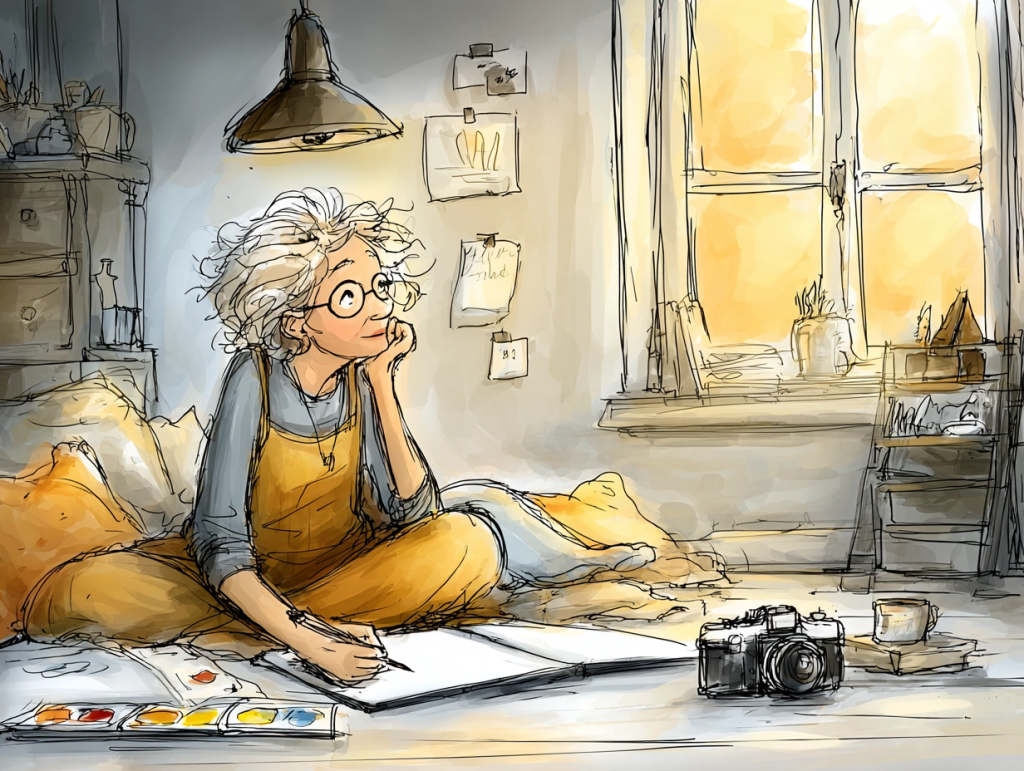
Here are a few questions to help you take an honest snapshot:
- What parts of your life feel full and fulfilling?
- Where are you craving more?
- Who or what helps you feel supported?
- What’s your financial reality, and how does it affect your freedom to explore?
That last one matters more than people admit. Money can shape your options, your timeline, and your stress level. Your third act can still be meaningful at any budget, but it helps to name your actual constraints so you can work with them instead of fighting them.
One of the most steadying things you can do is tell yourself the truth: “This is where I’m starting.” Then you can choose a path that works.
What if I’m asking “What’s for me?” and my mind goes blank?
That’s normal, especially if you’ve spent years in roles where your needs came last. Start with what you know today: what drains you, what calms you, what you miss, and what you keep coming back to. Clarity usually shows up after you begin, not before.
Feel the fear, and move anyway
Let’s name the thoughts that often show up right when you start to consider change:
- “Am I too late to start something new?”
- “What if I fail?”
- “What will people think?”
If any of those hit a nerve, you’re not alone.

Fear doesn’t mean you’re doing it wrong. It often means you’re standing at the edge of something that matters. The goal isn’t to erase fear. It’s to stop letting fear run the show.
Picture fear like a backseat passenger. It can talk. It can complain. It can point out risks.
But it doesn’t get to drive the car.
A practical way to work with fear is to shrink the decision. Instead of “I’m going to become a painter,” make it “I’m going to paint for 30 minutes this weekend.” Instead of “I’m changing my whole life,” make it “I’m going to gather information.”
That’s how confidence gets built. Not through big declarations, but through small follow-through.
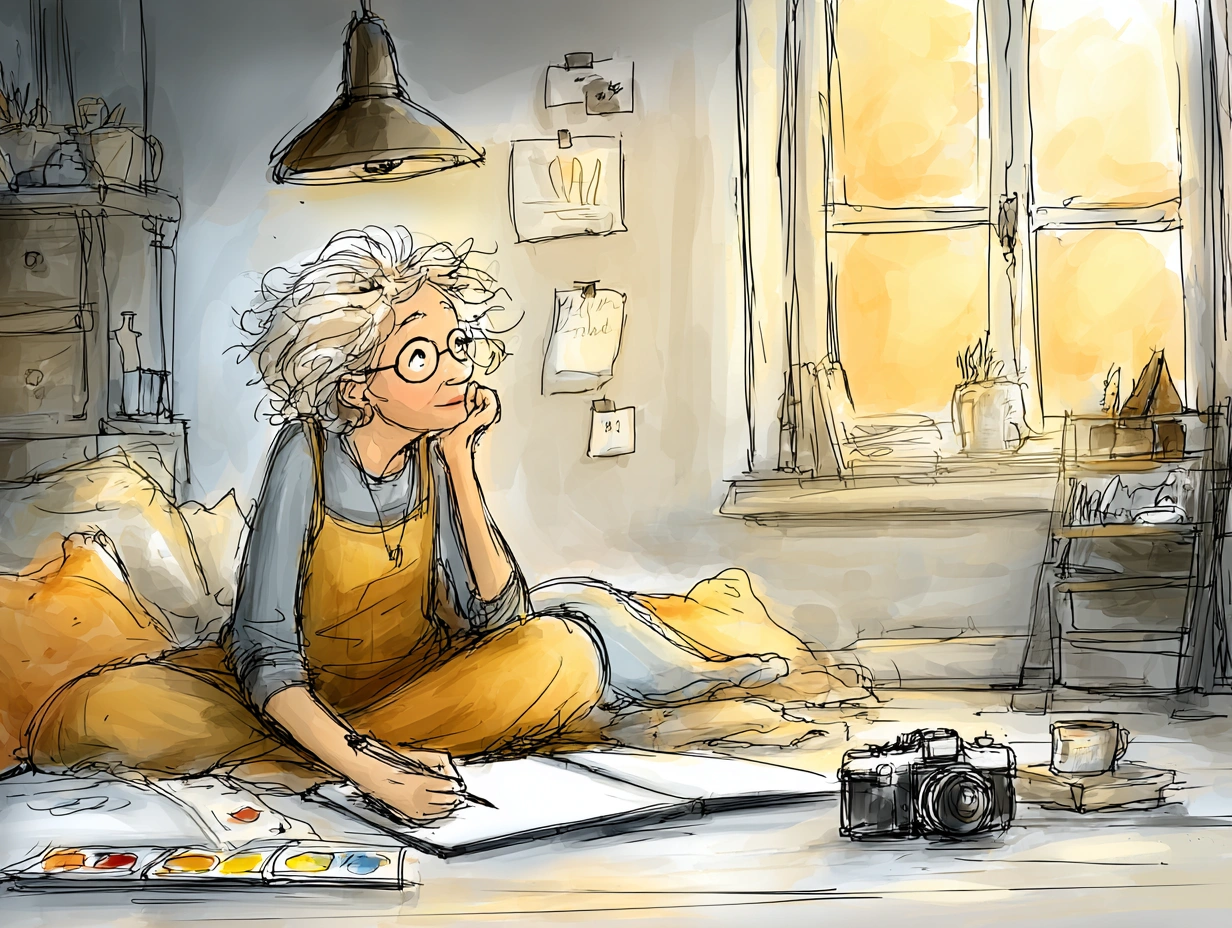
After decades of ignoring my creative side, I stumbled on an index card challenge, a simple idea where you create a piece of art on an index card every day for 30 days. It felt almost too small to matter, which made it easier to start. That challenge lit something back up in me. Now I have shelves of art supplies and plenty of works in progress.
That’s the thing. Sometimes your third act begins with something almost laughably simple.
And then it builds.
If you want a practical nudge on getting started, AARP has a straightforward guide with ideas for easing into a new interest without making it a huge production: AARP’s tips to inspire you to start a new hobby.
Facing fears in real life (the part people don’t post about)
Fear often sounds like “I’ll look foolish.”
So you don’t go to the class.
You don’t join the group.
You don’t try the thing.
But here’s what I’ve seen again and again: the discomfort is usually strongest before you start. Once you’re doing the thing, even as a beginner, your brain has less space for dramatic stories.
You’re busy learning. You’re busy being present.
That’s a win.
Welcome to your creative awakening
There’s an old message floating around that life after 50 is when you “settle down.”

But what if this season is actually a creative awakening?
Not in a loud, performative way. Not in an “I quit everything and move to Italy” way.
More like this: you have decades of experience now. You know what matters. You’ve survived hard things. You’ve learned what you won’t tolerate. You’ve collected wisdom the younger version of you didn’t have.
Now you get to use it, for you.
This isn’t reinvention. It’s reconnection.
It’s giving space to the parts of you that got quiet while you were busy holding everything together, parts that never disappeared, they were just waiting.
How to uncover hidden passions (without turning it into homework)
Passion can sound like a lightning bolt. A calling. A single perfect answer.
In real life, it often shows up more like a flicker.
A small pull. A curiosity. A moment where you feel a little more like yourself.
Here are a few ways to notice those sparks.
Get Your Free Workbook!
Reflect on your life lessons, values, and creative sparks to uncover the purpose that’s been there all along.
Look back at what you loved before you were “practical”
What did you enjoy when no one was grading you, paying you, or watching you?
Think childhood and teen years. Not because you need to return to the past, but because your early interests can be clues. Many of us were naturally drawn to making things, organizing, helping, teaching, exploring, writing, building, performing, or caring for animals before life got busy.
I didn’t return to some grand childhood dream. I returned to creating, the simple act of making something with my hands. It surprised me how much I missed that feeling. And now, creative supplies are scattered all throughout my house, wherever I spent a few minutes creating.
Notice what keeps pulling you in
Pay attention to what you click, re-watch, save, or keep talking about.
- That article you opened even though you were “just scrolling”
- That conversation you can’t stop thinking about
- That idea that makes you sit up a little straighter
These are clues. Not commitments, just clues.

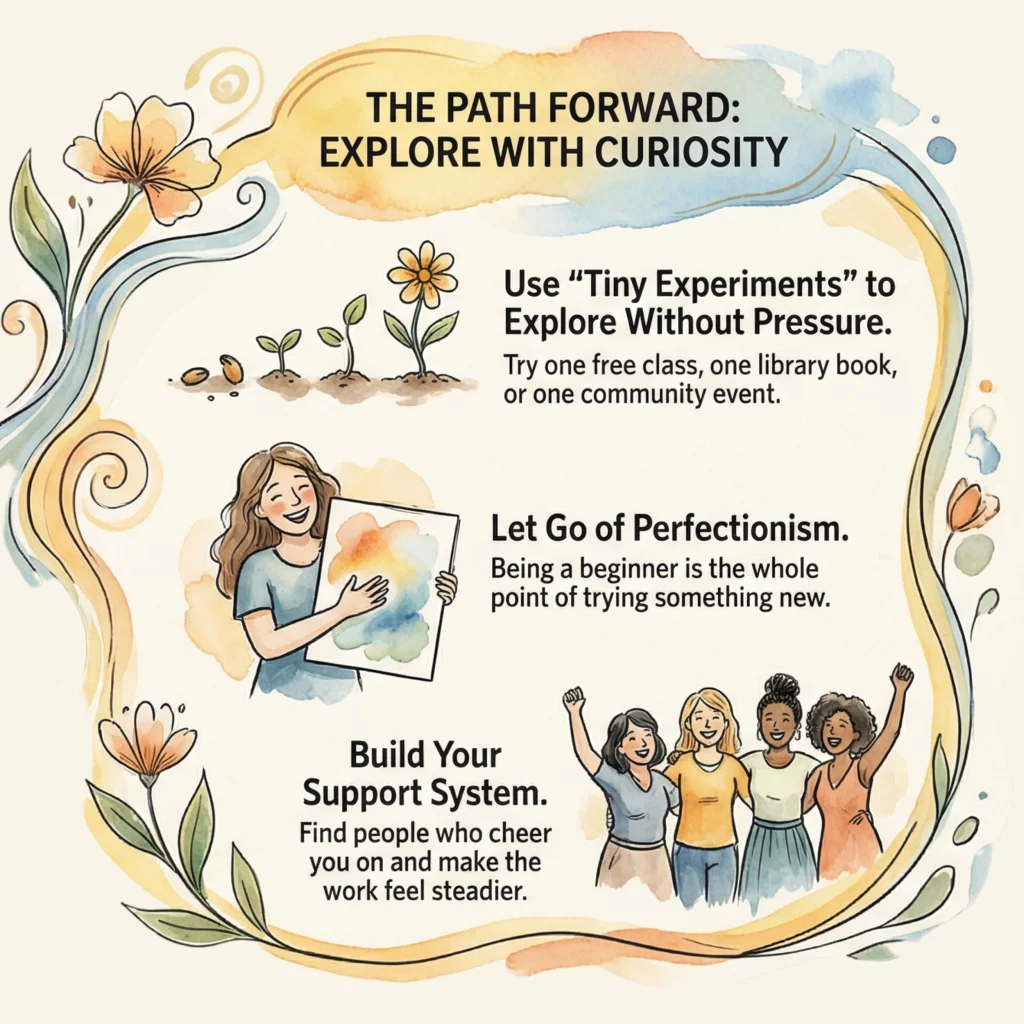
Try tiny experiments
Tiny experiments are how you explore without pressure. They keep you out of the “all or nothing” trap.
Examples:
- One free class
- One library book on a topic that keeps calling you
- One YouTube tutorial
- One community event
A friend of mine tried a free community painting class. Now she hosts art nights in her living room. Wild, right? All it took was showing up once.
What if I don’t feel passionate about anything?
Start with interest, not passion. Passion often comes after you build skill, community, or consistency. Focus on what makes you curious, calmer, or more engaged, then follow that thread.
Turn interest into action (where the real change happens)
Curiosity is the spark. Action is what turns it into something real.
This is where many women get stuck, not because they can’t do it, but because they think they have to do it perfectly.
You don’t.
Here’s a doable way to start.
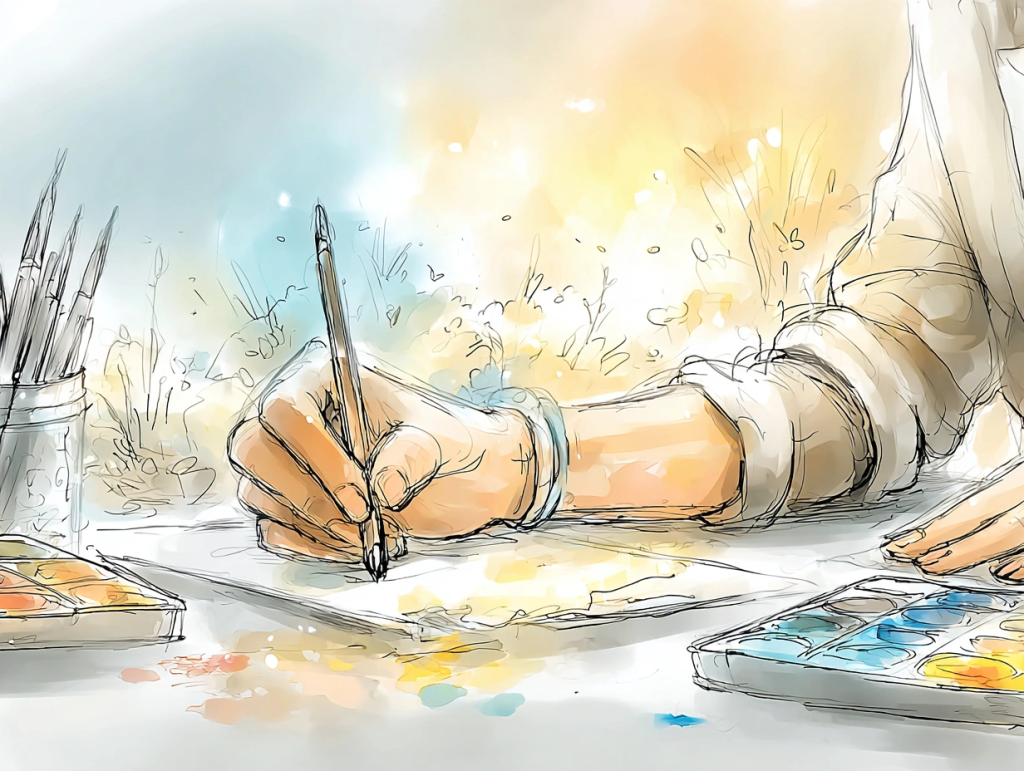
Start small (smaller than you think you should)
Pick a time that feels almost too easy.
Fifteen minutes a week counts. A single Saturday morning counts. One evening class counts.
Small actions reduce resistance, and they build trust with yourself. That trust matters more than motivation.
Let go of perfection (this is exploration, not performance)
If you’re trying something new, you’re supposed to be bad at it at first. That’s not failure, that’s being a beginner.
Give yourself permission to make “messy first drafts,” whether it’s writing, learning guitar, or showing up to a meet-up where you don’t know anyone.
Track how it makes you feel
You don’t need an elaborate journal. A note in your phone works.
After you try something, ask:
- Did I feel energized or drained?
- Did time move faster or slower?
- Did I feel more like myself?
- Do I want to do it again, even a little?
Not every interest will stick. That’s fine. You’re gathering information. You’re following breadcrumbs.
I learned I don’t need every project to become a finished masterpiece. Some projects are just proof that I’m still curious. That’s enough.
A simple way to track your “third act data”
If you like structure, try a quick check-in after each experiment:
| Experiment | Time spent | How I felt during | How I felt after | Do I want to repeat? |
| Example: free painting class | 90 minutes | Nervous, then focused | Calm, proud | Yes |
This keeps the process grounded. It also helps you notice patterns, what gives you energy, what feels like a chore, what brings you back to yourself.
Build a support system (because you don’t have to do this alone)
Your third act doesn’t have to be a solo mission, even if you live alone, love your independence, or feel tired of being the one who always has it together.
The right people make growth easier.
Not because they do it for you, but because they remind you you’re not doing it in a vacuum.

Think about:
- Who cheers you on (friends, family, mentors)
- Where you feel belonging (groups, workshops, online spaces)
- What inspires you to stay curious (a class, a book club, a walking friend, an art group)
I like the image of scaffolding. The scaffolding supports the building while it’s going up. It doesn’t become the building. It’s just there so the work is safer and steadier.
Take a moment and think about this without overthinking it: Who in your life encourages your growth?
Reach out. Reconnect.
Or build new connections on purpose, one conversation at a time.
Give yourself permission to pivot (it’s not wasted time)
Trying new things means some of them won’t fit.
That isn’t a sign you made a mistake. It’s a sign you’re paying attention.
Every “nope” gets you closer to your “yes.”
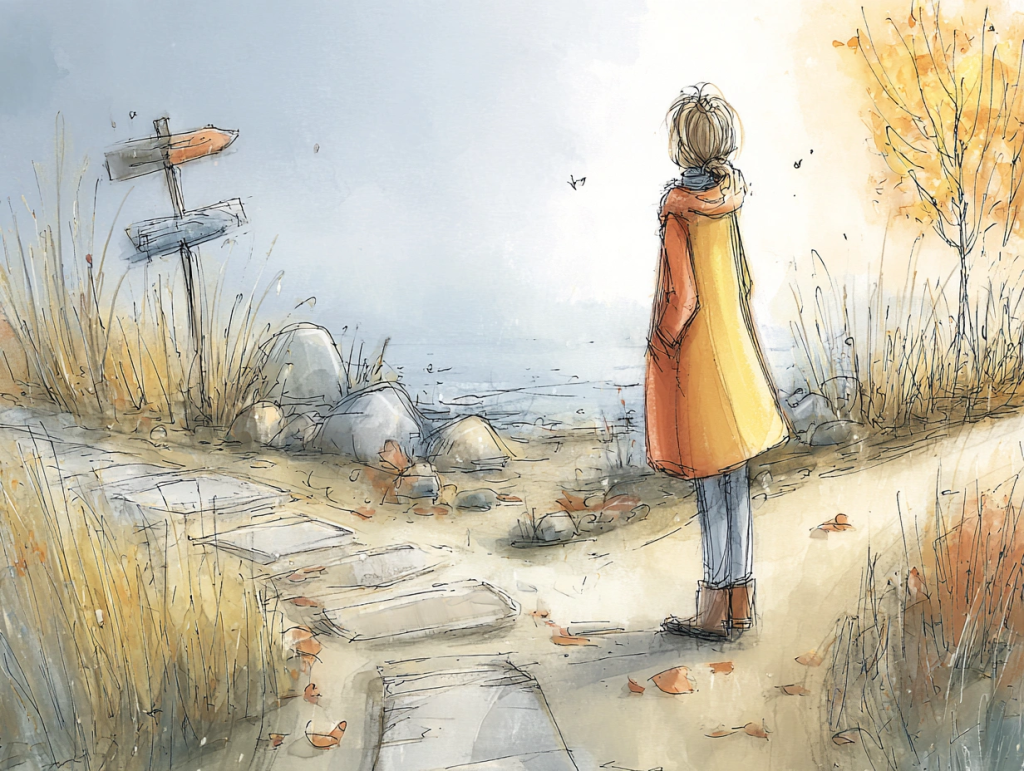
Pivoting is part of the process, especially in midlife, when you know yourself better and you also have less patience for what doesn’t feel true.
This is discovering, not performing.
You’re allowed to change your mind. You’re allowed to stop. You’re allowed to keep what works and leave the rest.
This is just the beginning of your third act
Your third act isn’t about becoming someone else.
It’s about rediscovering the best parts of who you already are, and giving them room to breathe.
You don’t need a 10-year plan.
You need a spark.
You need a step.
You need enough space to follow what feels true, even if it’s not impressive on paper.
If you’ve been avoiding this for years, that’s okay. You get to start fresh today.
Key Takeaways
Your third act starts with honest self-awareness, not pressure.
Fear is normal, but it doesn’t get to make your choices.
Passion often shows up through small experiments, not big announcements.
The goal is reconnection, not reinvention.
A support system makes the process steadier, even for independent women.
Pivoting isn’t failure, it’s how you learn what fits.
3 Ways to Start Today
- Revisit old joys: pick one past hobby you miss and spend 20 minutes with it this week.
- Follow sparks: notice what you keep reading, saving, or talking about, then choose one small way to explore it.
- Try something new (no strings attached): sign up for a free class, attend a one-time event, or follow a beginner tutorial at home.
So . . .
What passion or curiosity are you ready to explore next?
Join us on Facebook in The Reimagined Journey: Solo Midlife Women